KABUL: A prominent exiled military commander has announced the formation of a new armed front against the Taliban, vowing to conduct regular military and intelligence operations targeting the group’s senior leadership, strategic centers, and personnel across Afghanistan.
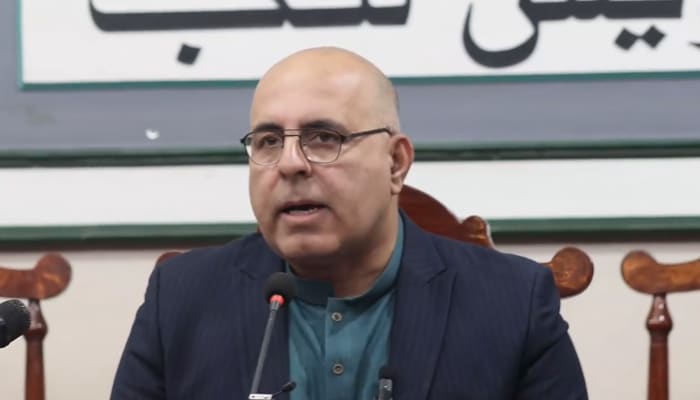
In a video message released over the weekend, Sami Sadat, a senior commander of the newly declared United Afghanistan Front, outlined an escalation in resistance tactics. He stated that his forces would move beyond sporadic protests and localized skirmishes to embrace a sustained, organized campaign of armed struggle.
“Our main targets are the Taliban’s top decision-makers, their key military bases, and all their operational personnel,” Sadat said in the recording, the authenticity of which has been verified by multiple regional monitors. “Every intelligence and military operation will be calibrated to dismantle their command structure.”
The announcement marks a significant rhetorical shift from previous opposition efforts, which have largely been confined to civil disobedience and scattered guerrilla actions in rural areas. Sadat, a former Afghan National Army officer who held senior posts under the previous U.S.-backed government, has been operating from abroad but claims to have established communication and supply networks inside the country.
The emergence of the United Afghanistan Front follows a wave of recent anti-Taliban resistance in Badakhshan province and other northern districts, where local militias have clashed with Taliban forces in recent weeks. Those confrontations, though limited in scale, have reportedly inflicted casualties on both sides and exposed vulnerabilities in the Taliban’s rural security posture.
Political analysts say the new front deepens longstanding questions about the Taliban’s administrative control more than four years after they returned to power. While the group has maintained a monopoly on formal governance, insurgency experts note that pockets of armed opposition are slowly coalescing, potentially challenging the status quo.
“This is not just a symbolic statement,” said a regional security researcher who spoke on condition of anonymity. “Sadat’s military background and his explicit focus on high-value targets suggest a more professionalized resistance than we’ve seen. The Taliban will have to reassess their internal security deployments, especially in the north and east.”
There was no immediate official response from Taliban spokespersons. However, provincial officials in some areas have downplayed the threat, describing the new front as a “fringe movement” with limited popular support.
The timing of Sadat’s message—coming amid internal economic pressures and diplomatic isolation for the Taliban—has fueled speculation about whether the front intends to synchronize its operations with other armed groups or external actors. Sadat did not name any allies in his video, but he called on former Afghan security forces and disenchanted civilians to join what he termed a “national liberation effort.”
For now, the United Afghanistan Front remains an untested force on the battlefield. Yet its very existence—and the public, unapologetic call for regular military operations—has injected a new element of uncertainty into Afghanistan’s fragile security landscape, reminding observers that the Taliban’s hold on power, while firm in urban centers, is far from uncontested in the hinterlands.