
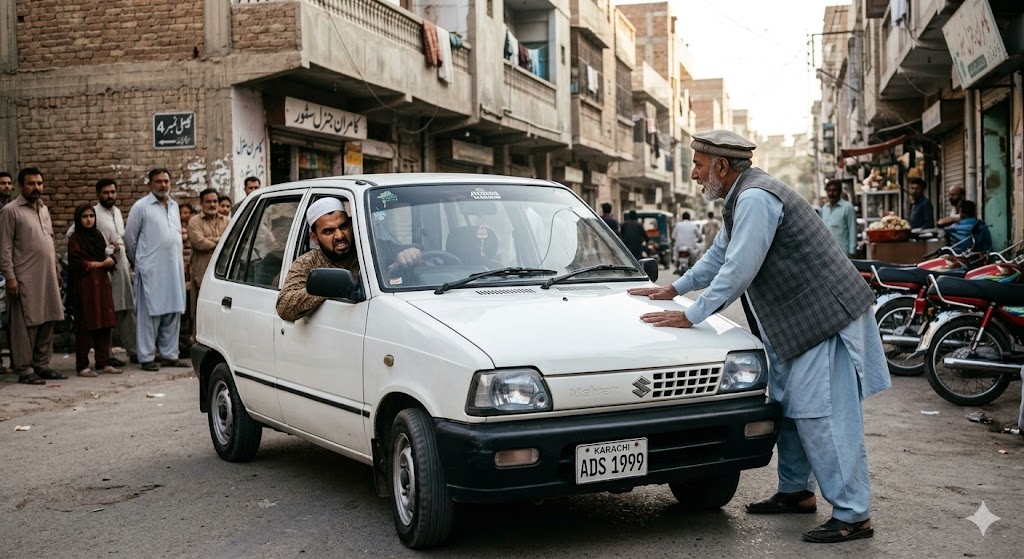
RAHIM YAR KHAN: A domestic dispute turned fatal in the Abbasiya area of Rahim Yar Khan when a man ran over his father-in-law with a vehicle before fleeing the scene.
The incident occurred when the man arrived at his in-laws’ residence to reconcile with his estranged wife and bring her back home.
A heated argument erupted between the family members and the man, prompting him to leave the house in anger without his wife.
In an attempt to prevent him from leaving, the father-in-law stood in front of the vehicle. The man drove forward, striking his father-in-law, and sped away from the location.
The victim succumbed to his critical injuries, and the police have registered a case to initiate a full investigation.
Family disputes in Pakistan frequently escalate into deadly incidents, reflecting a profound societal challenge rooted in complex socioeconomic, cultural, and legal dynamics.
Issues surrounding property distribution, marital discords, domestic friction, and perceived family honor regularly transcend verbal disagreements, culminating in severe violence or homicide.
These conflicts are often aggravated by deep-seated patriarchal structures and cultural norms that prioritize rigid notions of authority and honor over conflict resolution, leaving vulnerable family members—particularly women and elders—at heightened risk.
The escalation of these disputes into fatal encounters is significantly accelerated by the widespread availability of firearms and a prevalent culture of weapon ownership.
When intense emotional grievances combine with immediate access to lethal weapons, spontaneous arguments can transform into tragic, irreversible acts of violence within moments.
Furthermore, a general lack of institutional trust and a weak legal framework often deter individuals from seeking formal mediation, leading parties to take matters into their own hands.
Compounding the issue is the slow pace of the formal judicial system.
Property litigations and familial lawsuits can drag on for decades through generations, exhausting resources and mounting psychological distress.
This systemic delay frequently drives families to seek immediate, unregulated retribution or rely on informal tribal councils that may validate aggressive outcomes.
Consequently, domestic friction remains a leading catalyst for violent crime across both rural and urban areas of the country, highlighting an urgent need for accessible legal aid, effective gun control, and institutionalized family counseling services.