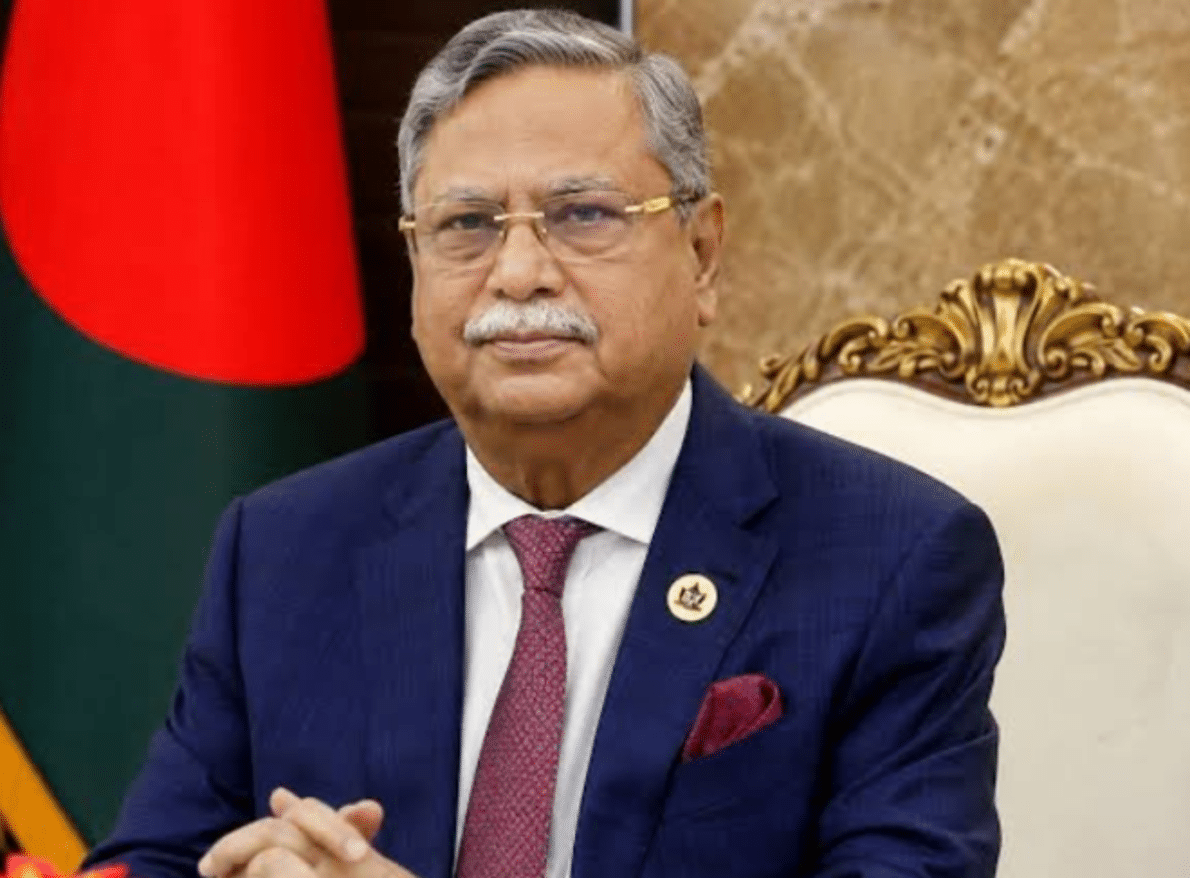
DHAKA: Bangladesh President Mohammad Shahabuddin has resigned from office, citing serious health issues that have affected his ability to continue performing his constitutional responsibilities.
The 76-year-old president had been serving as Bangladesh’s head of state since April 2023.
The five-year constitutional term was scheduled to continue until 2028, but his resignation comes amid ongoing political pressure and growing calls from opposition parties demanding that he step down.
In this regard, President Shahabuddin said recent medical examinations had diagnosed him with autonomic neuropathy, a neurological disorder that causes damage to the nerves controlling involuntary body functions.
He explained that the condition has resulted in occasional sudden and temporary episodes of unconsciousness, making it increasingly difficult for him to fulfill the responsibilities of the presidency.
“I have decided to resign because my medical condition no longer allows me to discharge my duties effectively,” the president said, emphasizing that the decision was made solely on health grounds.
Shahabuddin, who was widely regarded as a close ally of former Prime Minister Sheikh Hasina, had faced sustained criticism from opposition political parties for several months. They had repeatedly called for his resignation, arguing that he no longer enjoyed public confidence.
Following the resignation, the President’s Press Secretary announced that the Speaker of the National Parliament would assume presidential responsibilities until a new president is elected.
Under the Constitution of Bangladesh, Speaker Hafiz Uddin Ahmed will serve as the acting president during the interim period. Constitutional provisions require that a new president be elected within 90 days.
The resignation also comes at a time when local media reports had claimed that President Shahabuddin spoke by telephone with former Prime Minister Sheikh Hasina—currently reported to be living in India—during a visit to the United Kingdom for medical treatment in May this year. The reports generated political debate within Bangladesh.
However, Shahabuddin firmly denied those claims in an interview with a Bangladeshi newspaper, reiterating that his resignation was based entirely on medical reasons. He stated that he has been dealing with multiple health complications and dismissed speculation linking his decision to political developments.
The resignation marks a significant political development for Bangladesh, as the country prepares for a constitutional transition and the election of a new president in the coming months. Authorities have indicated that the succession process will proceed in accordance with constitutional requirements to ensure institutional continuity and political stability.