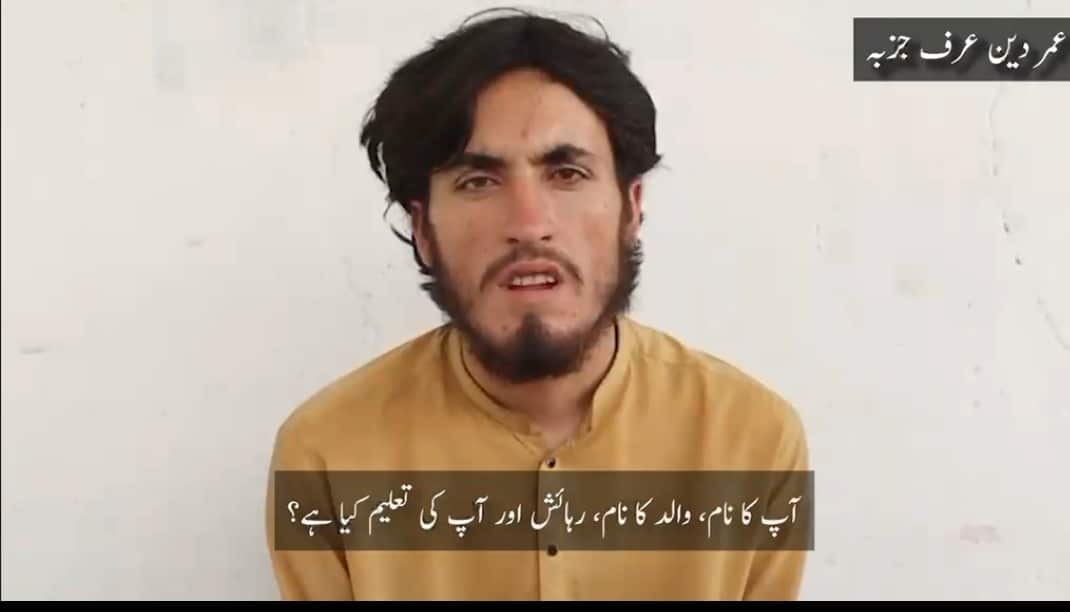
ISLAMABAD: The confessional statement of Umar Din, alias Jazba, a captured terrorist belonging to Fitna al-Khawarij, has brought staggering revelations to light following his arrest by security forces.
In his confession, Umar Din disclosed that he joined the Tehrik-i-Taliban Pakistan (TTP) on January 12, 2025. He stated that between 60 and 70 Afghan nationals are present at his operational center, and various members received specialized training in handling firearms and rockets across Afghanistan and Waziristan.
According to his statement, this terror network executed the attack on the Shadi Khel base and orchestrated an Improvised Explosive Device (IED) blast on Kotah Khwah Road, which resulted in the deaths of 7 police officers during the holy month of Ramadan.
Umar Din further exposed severe moral corruption within the ranks, stating that members of the organization are drug addicts, and ethical depravity, abuse, and illicit activities are rampant inside the center.
He noted that multiple commanders keep young boys with them for exploitation.
Financially, Fitna al-Khawarij receives direct funding from commanders based in Afghanistan.
The group sustains its operations through a network of organized crime, including extortion under the guise of taxes, vehicle snatching, and kidnapping children for ransom.
The captured operative admitted that commanders manipulate youth in the name of Jihad and the enforcement of Sharia, whereas they actually lure them into the organization with promises of weapons, money, and luxury.
He acknowledged that he was misled by propaganda videos, only to realize later that this path leads to nothing but destruction and ruin.
This high-profile confession sheds light on the growing operational links between cross-border militant networks and transnational organized crime along the Pakistan-Afghanistan border.
Security analysts have long warned that the remnants of the Tehrik-i-Taliban Pakistan (TTP), now referred to as Fitna al-Khawarij, are increasingly shifting from ideological warfare toward syndicate-style criminal operations to sustain themselves.
The logistical coordination between training camps in Waziristan and safe havens in Afghanistan remains a major geopolitical challenge.
For global observers, these developments emphasize the urgent need for robust border management to prevent regional instability from escalating further in South Asia.
The detailed confession underscores that Fitna al-Khawarij weaponizes religion to brainwash the youth, while its true objectives are centered entirely on spreading chaos, extortion, kidnapping, drug trafficking, and fueling criminal enterprises.