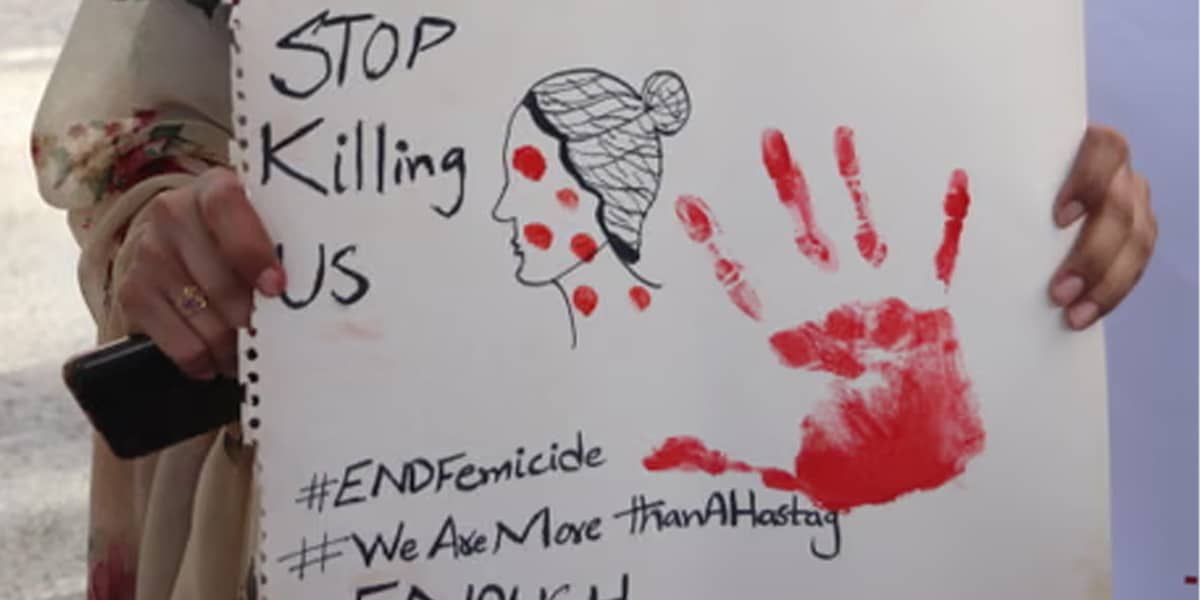
QUETTA: Violence against women has persisted in Balochistan for years, with at least 390 cases of murder and so-called honour killings reported between 2020 and 2025, according to data compiled by the Aurat Foundation.
Serious cases of violence against women and girls have also continued to emerge this year.
Recent incidents include an acid attack on a female doctor at Quetta’s Civil Hospital, another acid attack on a woman in Mastung, the alleged killing of a 15-year-old girl by her husband in Kuchlak, and the alleged rape and murder of a minor girl in Nushki.
Meanwhile, annual data from the Aurat Foundation highlights the continuing scale of violence against women across the province.
According to the data, authorities and media outlets reported 123 cases of violence against women in 2025. These included 58 honour killings, 32 murders, nine cases of domestic violence, 11 kidnappings and six cases of sexual violence.
Quetta alone accounted for 39 of the 123 reported cases.
The data also shows a persistent pattern of killings in previous years. In 2024, women faced 33 reported honour killings and 24 murders. In 2023, the province recorded 24 honour killings and 23 murders.
Similarly, authorities reported 28 honour killings and 48 murders in 2022, while 2021 saw 24 honour killings and 12 murders.
In 2020, the Aurat Foundation recorded 51 honour killings and 33 murders of women.
Taken together, these figures bring the total number of reported murders and honour killings of women between 2020 and 2025 to 390. However, the figure does not include other forms of violence against women.
Early Marriage May Increase Risk of Violence
Aurat Foundation Resident Director Allahdin Khilji told WE News that Balochistan had witnessed several major cases of violence against women during the past month and a half.
He said the alleged killing of a 15-year-old girl in Kuchlak also highlights the potential consequences of early marriage.
According to Khilji, a young girl may lack the physical and emotional maturity required to manage marital and household responsibilities. As a result, conflicts can emerge and, in some cases, escalate into violence or even murder.
He added that Balochistan had reported three to four acid attack cases this year.
The Aurat Foundation has submitted a draft law to the provincial government aimed at preventing acid attacks and protecting survivors. However, the proposed legislation remains under consideration by the Home Department.
Khilji said many cases of violence against women went unreported in the past. However, greater public awareness and increased media coverage have helped bring more incidents to light.
He noted that Balochistan already has laws aimed at protecting women. Nevertheless, he said effective enforcement remains a major challenge.
He stressed the need to provide survivors with timely justice, medical treatment, psychological support and legal assistance.
Multiple Factors Drive Violence Against Women
Psychologist Sadia Ashfaq told WE News that violence against women rarely results from a single cause. Instead, she said, a combination of social, economic and psychological factors can contribute to such incidents.
She identified early marriage, domestic and social pressure, patriarchal attitudes, poor anger management, treating women as property, economic dependence and the tendency to resolve conflicts through force rather than dialogue as key contributing factors.
From a psychological perspective, Ashfaq said persistent anger, intolerance, excessive possessiveness and the belief that violence can solve disputes can further increase the risk.
She said authorities could reduce violence against women by providing timely protection and justice to survivors and ensuring that perpetrators face punishment under the law.
Also Read: ‘Mom went for Hajj’: Son waits for mother killed in honour killing
Families also need access to psychological and social support to help them resolve conflicts before they escalate, she added.