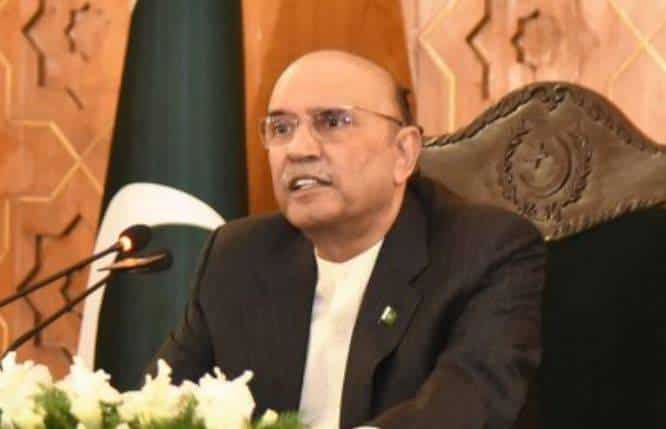
MOROO: President of Pakistan Asif Ali Zardari has said that the country will collectively strengthen state institutions, emphasizing unity, economic self-reliance, and agricultural modernization as key priorities for national progress.
President Zardari addressed a public gathering held at the residence of Sindh Interior Minister Zia-ul-Hassan Lanjar in Moro, Sindh. During the visit, the President also met local dignitaries, political representatives, and community elders, discussing matters of public importance and regional development.
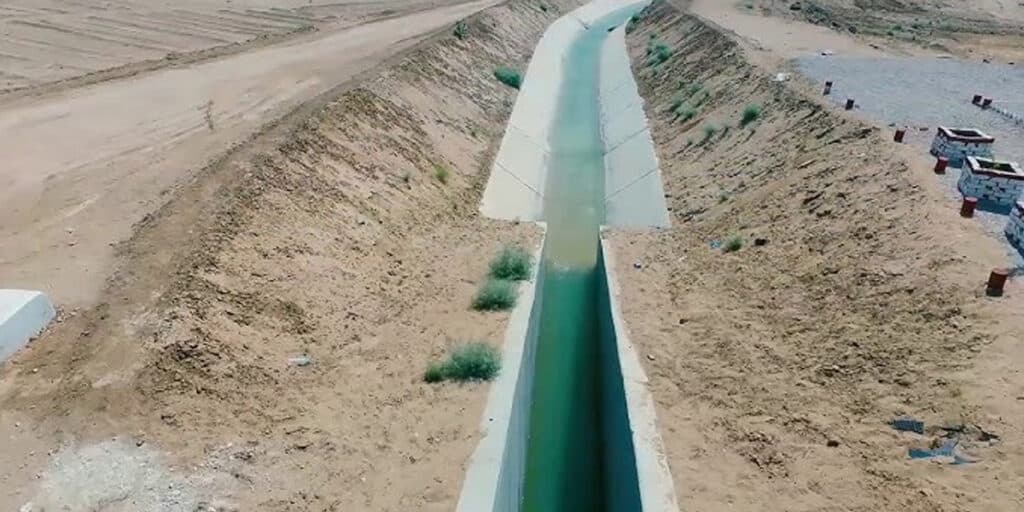
In this regard, President Zardari stressed that Pakistan must focus on providing economic independence to its people. He stated that agriculture, being the backbone of the national economy, requires the adoption of modern technology in line with contemporary global standards to improve productivity and sustainability.
“The use and promotion of modern agricultural techniques is essential in today’s era,” he said, mentioning the need for innovation in the farming sector to support rural livelihoods and strengthen the national economy.
The President also made remarks regarding regional tensions, stating that international media, according to him, does not adequately highlight issues faced by Muslims in India.
He further commented on past military tensions, claiming that Pakistan delivered a strong response during a brief period of conflict, which he described as a significant lesson for the opposing side.
President Zardari also referred to incidents involving aerial engagements, stating that certain actions taken by Pakistan were intended as a response to aggression.
These statements were presented as part of his broader narrative on national defense and strategic preparedness.
The President reiterated the importance of unity between political leadership and state institutions. He stated that strengthening state structures would ultimately contribute to national stability and progress.
“We must work together to strengthen our institutions, empower our governance system, and reinforce the state itself,” he said, adding that effective governance remains one of the country’s key challenges.
This breaking development comes amid ongoing political discussions on governance, economic reform, and national cohesion.