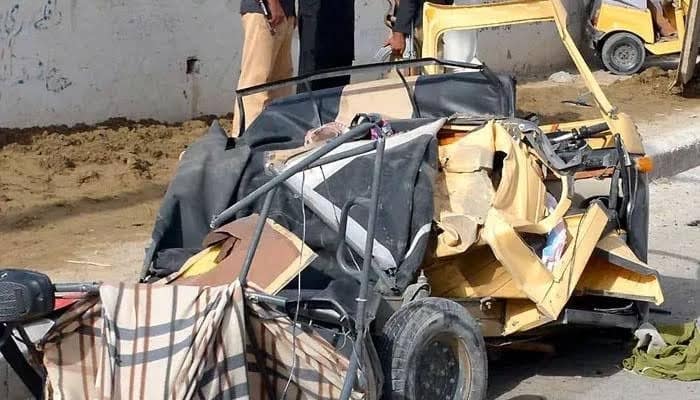
FAISALABAD: A truck collided with a rickshaw at the Khanoana Bypass Chowk in Faisalabad, resulting in the deaths of three people and leaving three others injured.
According to rescue authorities, the injured were immediately shifted to a hospital for medical treatment.
The victims who lost their lives were identified as 50-year-old Manzoor Hussain, 47-year-old Shahnaz Bibi, and 4-year-old Adnan. Rescue officials stated that the affected family was traveling from Mian Channu to Faisalabad to attend a funeral gathering (Khatm-e-Qul).
Road Accidents in Punjab: A Decade of Crisis (2016–2026)
Over the past decade, road traffic accidents (RTCs) in Punjab have emerged as a critical public health and safety crisis. Driven by rapid urbanization, massive surges in vehicle ownership, and burgeoning traffic volumes, data compiled by emergency services like Rescue 1122 indicate a staggering escalation in crashes. Hundreds of thousands of collisions occur annually, resulting in thousands of fatalities and severe, often life-altering injuries, with major urban centers like Lahore, Faisalabad, and Multan consistently recording the highest caseloads.
A defining characteristic of accidents in the province over the last ten years is the disproportionate vulnerability of two-wheeler users. Motorcycles account for roughly 75% of all vehicles involved in crashes, exposing riders to severe head traumas and bone fractures.
Statistical analyses highlight that the primary root causes remain persistent: widespread over-speeding, reckless driving, non-compliance with traffic laws, lane violations, and inadequate commuter awareness.
Furthermore, young adults and family breadwinners form the largest demographic of victims, compounding the socio-economic toll on households.
Despite major infrastructural expansions and stricter provincial traffic policing initiatives—such as enhanced digital licensing and e-challan systems—the sheer density of traffic demands a more aggressive overhaul.
Experts stress that mitigating this decade-long trend requires strict speed enforcement, prioritized lanes for motorcycles, improved civic education, and robust structural safety enhancements across provincial highways.