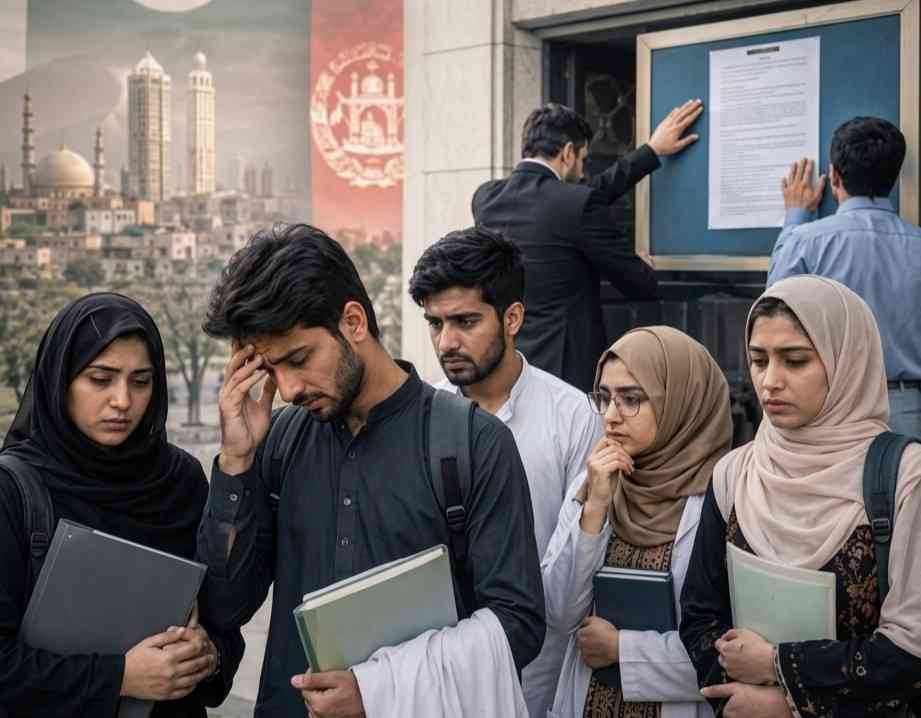
ISLAMABAD: Pakistani authorities on Wednesday defended their action against Afghan medical students, saying they are not seeking the blanket expulsion of Afghan students but are targeting those who lack valid legal status or have violated immigration and education rules.
The clarification comes after Lahore’s King Edward Medical University (KEMU) expelled 21 Afghan medical students earlier this week, including seven students in their final year, triggering criticism in Pakistan and Afghanistan.
KEMU took the action following fresh directives issued by the Pakistan Medical and Dental Council (PMDC) on September 1. Under the directive, medical and dental institutions were told to stop new admissions, placements, transfers, migrations and other forms of facilitation for Afghan nationals during the current academic session.
The institutions were also directed to review whether Afghan students had fulfilled the required legal and administrative conditions when they secured admission.
The development prompted concern from the Afghan Embassy in Islamabad, which on Tuesday criticized the decision and called for the protection of Afghan students’ educational rights.
However, Pakistani authorities have rejected the impression that the measures apply to all Afghan medical students.
According to the government’s explanation, authorities have ordered the departure of Afghan students who entered Pakistan illegally, do not hold valid visas, have overstayed expired visas, possess allegedly fake documents, or began their studies while holding visit visas.
The authorities also included Afghan nationals who have completed their studies but have subsequently remained in Pakistan to undertake house jobs or employment without the required legal status.
The government stressed that Afghan students who are legally enrolled in Pakistani medical colleges are not the target of the action.
“Students who are legally studying in medical colleges are our guests and are worthy of respect,” the authorities said, adding that Pakistan extends the same treatment to Afghan citizens legally residing in the country in other fields.
The government further linked the action against students lacking legal status to its broader campaign to repatriate undocumented Afghan nationals.
It argued that removing people who reside or work in Pakistan without valid legal authorization does not represent an exceptional policy, noting that countries including the United States, the United Kingdom and European states also enforce immigration laws against people who enter or remain in their territories illegally.
The controversy comes as Pakistan continues to tighten its scrutiny of Afghan nationals’ legal status, placing greater emphasis on valid visas, documentation and compliance with immigration requirements.
The authorities maintain that the measures are aimed at enforcing existing laws rather than restricting education for Afghan students who meet Pakistan’s legal and administrative requirements.