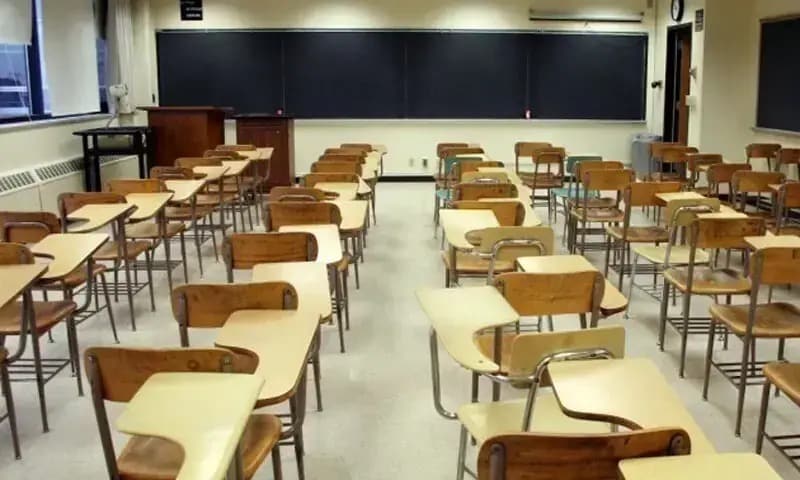
ISLAMABAD: In response to looming political demonstrations and security concerns, educational institutions in Islamabad have officially been slated for closure starting September 22.
According to reliable administrative sources, authorities have decided to shut down 24 public sector schools and colleges across the federal capital to accommodate incoming security personnel, as additional police contingents are being housed directly within these public academic campuses.
With security deployment taking precedence, routine academic activities across these shuttered campuses will remain suspended for the time being.
Furthermore, the Federal Directorate of Education has not yet formulated or announced any formal online education or alternative remote learning policy for the affected students.
The decision comes in the wake of announcements by major political factions, including Jamaat-e-Islami and Pakistan Tehreek-e-Insaf, regarding a scheduled long march toward the capital—a political mobilization that has already prompted authorities to place shipping containers along major federal thoroughfares and heavily restrict mobility, directly impacting educational institutions in Islamabad.
Impact of Protests on Education and Trade in the Federal Capital
Civil unrest, political long marches, and widespread demonstrations carry profound multi-dimensional consequences for both the academic sector and commercial trade within the federal capital.
When public schools and universities are forced to shut their doors or serve as temporary barracks for security forces, students suffer immediate learning disruptions.
In a city where academic calendars are already tight, unexpected closures interrupt critical syllabus pacing, derail examination schedules, and create severe psychological anxiety among students and parents.
Furthermore, the absence of robust online infrastructure or emergency remote learning frameworks often leaves children completely isolated from academic instruction during prolonged civil disruptions.
Simultaneously, commercial trade and local businesses bear a devastating economic toll during intense political protests.
The widespread deployment of shipping containers, road blockades, and stringent security cordons effectively paralyze major commercial hubs, disrupting supply chains, halting public transport, and severely restricting consumer footfall.
Retailers, wholesale markets, hospitality sectors, and daily-wage workers experience immediate revenue losses as commercial activity grinds to a halt.
Persistent road closures deter inter-city commerce and isolate business districts, translating into millions of rupees in daily economic losses.
ALSO READ: Punjab Schools to Host Mega Sports Events From October to December
Ultimately, while security measures remain a logistical necessity for maintaining public order during major political mobilizations, the recurring disruption to academic progression and commercial livelihoods highlights the urgent need for sustainable administrative frameworks that safeguard education, economic stability, and public safety simultaneously.