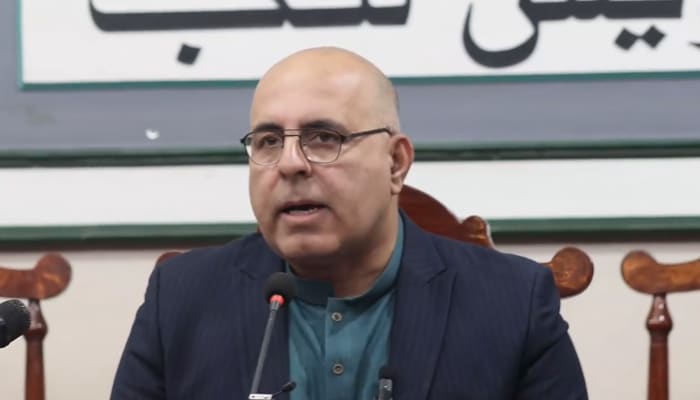

QUETTA: Balochistan Chief Minister Mir Sarfraz Bugti has urged the federal government to address the province’s growing water crisis, stating that the issue requires immediate attention to prevent further socio-economic challenges.
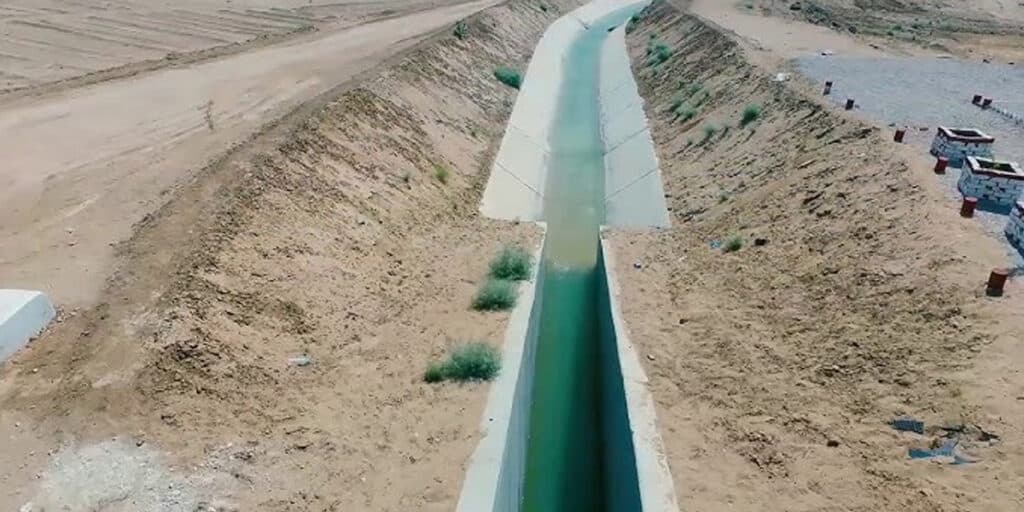
In this regard, the chief minister focused on that Balochistan is facing severe water shortages, particularly in Quetta and several other districts, and called for coordinated efforts between the federal and provincial governments.
Mir Sarfraz Bugti referred to a study conducted by the former Balochistan government in collaboration with the Turkish Cooperation and Coordination Agency (TIKA) in 1991.
Quetta required approximately 6,700 cubic feet of water per canal to meet the city’s needs. However, he said the available water supply has significantly declined over the years, leaving the provincial capital with a substantial deficit.
The chief minister explained that while Quetta currently requires around 5,000 cubic feet of water per canal, only 2,400 cubic feet are being supplied.
He further noted that the city’s natural recharge capacity has also fallen sharply, with groundwater replenishment now estimated at only 1,150 cubic feet, mentioning the growing pressure on available water resources.
Mir Sarfraz Bugti stressed that water is not merely an environmental issue but a matter directly linked to public welfare, agriculture, and the province’s long-term development.
He said the provincial government has already begun implementing measures to improve water management but acknowledged that resolving the crisis would require substantial federal support and investment.
The chief minister announced that the Balochistan government is preparing practical proposals to address the water shortage. These recommendations will be shared with the federal government to facilitate joint planning and ensure sustainable solutions for the province’s water needs.
He also observed that the effects of climate change, declining rainfall, and excessive extraction of groundwater have further aggravated the situation.