QUETTA: Balochistan, with its natural beauty, historical sites, coastal belt, mountains, and rich cultural heritage, is considered one of Pakistan’s most important tourist regions.
If peace, improved infrastructure, and government attention are ensured, tourism can not only strengthen the province’s economy but also create thousands of jobs, business opportunities, and a better standard of living.
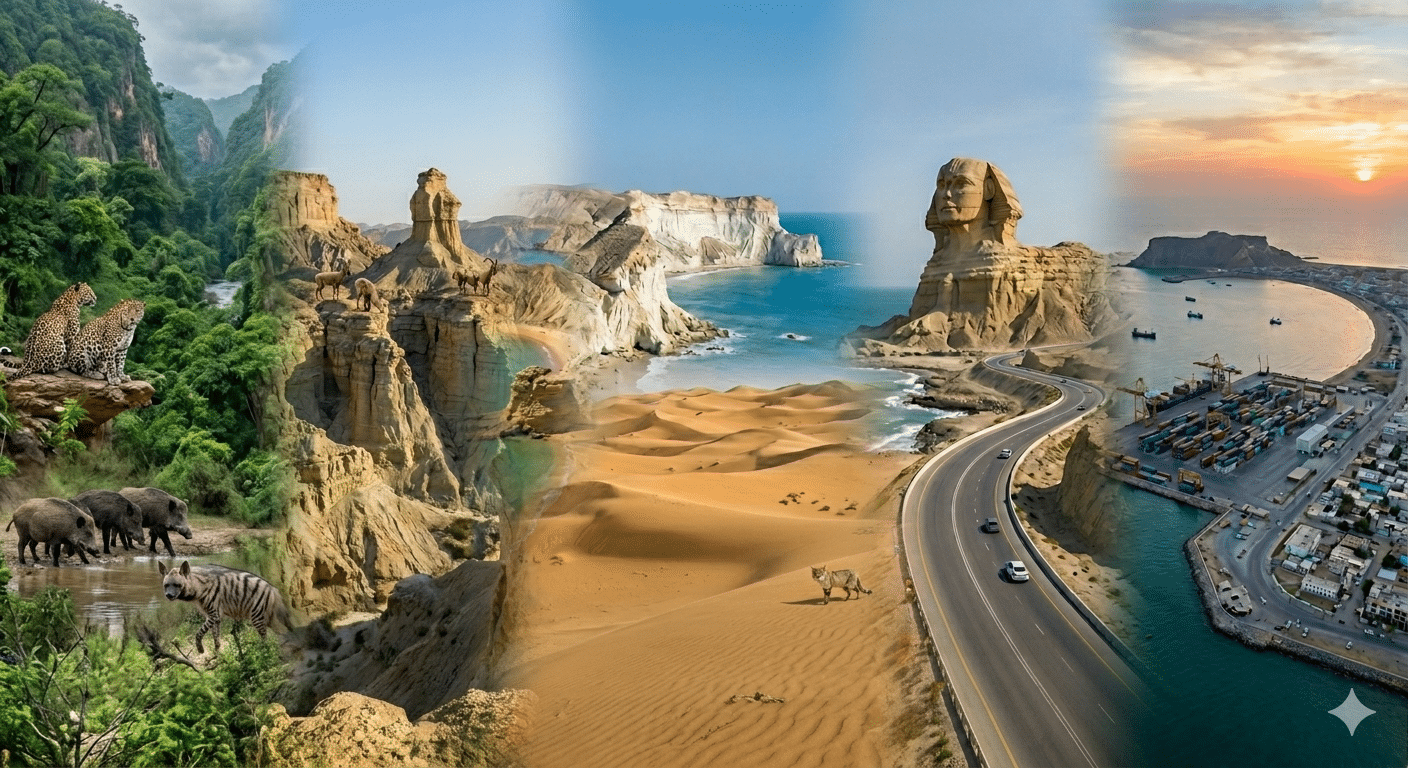
Coastal areas such as Gwadar, Ormara, Pasni, and Jiwani attract both local and international tourists due to their scenic beaches, clean waters, golden sands, and natural landscapes.
Places like Hingol National Park, Kund Malir, Princess of Hope, and mud volcanoes are key attractions where tourism growth could significantly benefit hotels, transport services, restaurants, and local businesses.
Ziarat holds special importance due to its pleasant weather, the Quaid-e-Azam Residency, and one of the world’s oldest juniper forests.
Similarly, the mountainous regions of Quetta, Zhob, Kalat, Mastung, and Bolan offer excellent tourism potential.
Natural and historical sites such as Pir Ghaib Waterfall, Hanna Lake, Urak Valley, Spin Karez, and Takht-e-Sulaiman, if properly developed, can become a sustainable source of income for local communities.
Experts believe that with peace, along with better roads, hotels, rescue services, guided systems, and security arrangements, tourism can bring a revolutionary change to Balochistan’s economy. It would create employment for youth, skill opportunities for women, and new life for local businesses.
Public opinion suggests that Balochistan’s tourist destinations are not only a treasure of natural beauty but also a key to economic development provided peace is maintained and the government prioritizes this sector seriously.