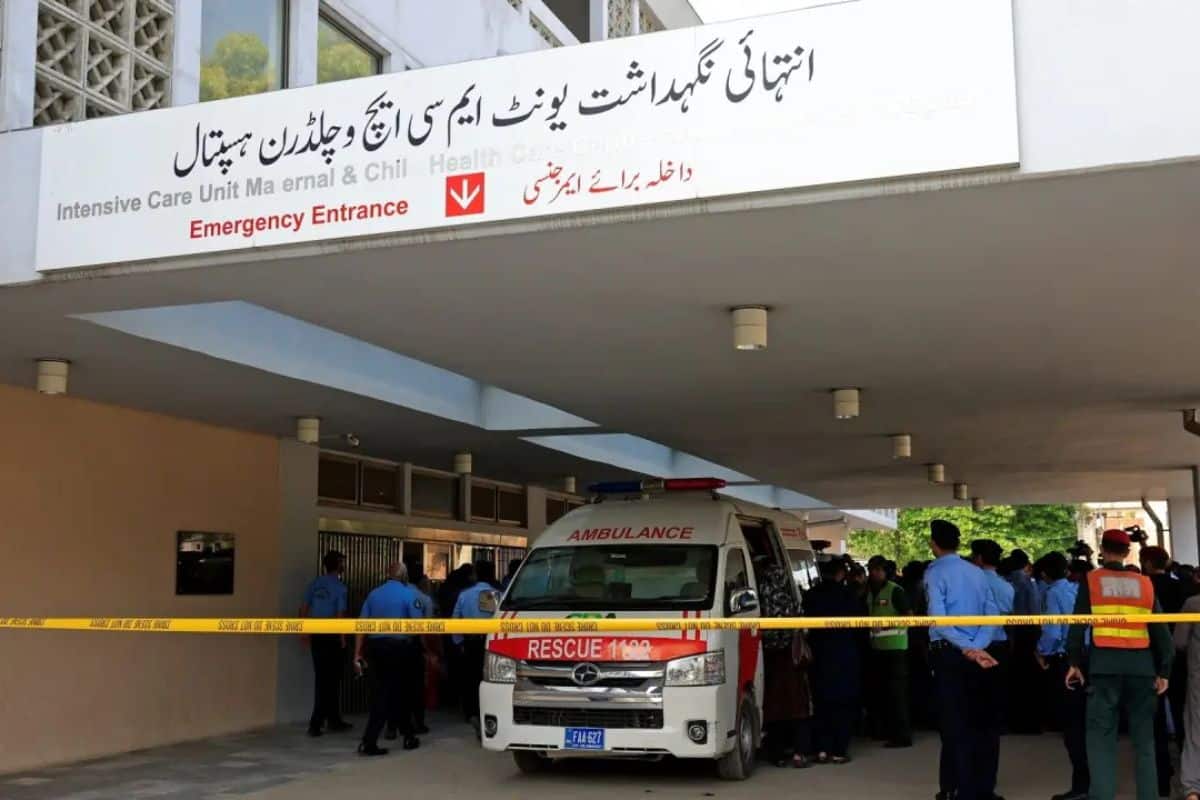
ISLAMABAD: The PIMS nursery fire inquiry report has identified an electrical fault involving an air-conditioning unit as the most probable cause of the blaze that killed 14 newborns, while concluding that the tragedy was also linked to wider systematic and institutional failures.
The comprehensive inquiry found that the fire most likely started because of abnormal localised electrical heating in the supply cable of AC Unit No. 2. However, investigators said the precise electrical defect and the individual duty holder responsible for it would require further determination.
According to the report, the fire became visible at around 6:38am, while dense smoke spread throughout the nursery within one to two minutes. This left medical and support staff with what investigators described as an exceptionally narrow window to rescue the infants.
The emergency was reportedly communicated to the Capital Emergency Service at 6:54am, creating a 16-minute gap that the inquiry committee identified as a significant chronological concern. The emergency service itself responded within minutes after receiving the confirmed notification.
PIMS Nursery Fire Inquiry Report Highlights Major Safety Failures
The inquiry found that the nursery lacked a functioning automatic smoke detection and fire alarm system as well as sprinkler protection. As a result, staff had to rely primarily on human observation and manual communication to detect and respond to the emergency.
The committee also highlighted a serious mismatch between the number of patients and available staff. Fifteen neonates who could not evacuate themselves were being cared for in a nursery designated for 10 beds, while only two doctors and two nurses were immediately available.
Investigators further found no adequately documented, approved and regularly rehearsed evacuation plan specifically designed for the nursery and its actual patient load.
The report also pointed to shortcomings in preventive electrical safety. It said there was no evidence of a systematic and traceable programme covering electrical cables, connections, insulation, earthing systems, breakers and potential overheating points.
Previous Fire Safety Warnings Were Not Fully Addressed
The inquiry noted that concerns about fire and life safety at PIMS had existed for years. Correspondence from the Capital Development Authority, observations by the Federal Ombudsman and PIMS’s own acknowledgement of ageing fire safety infrastructure had previously highlighted risks.
The committee also referred to a Nursing Hostel fire on July 6, 2026, which occurred only weeks before the nursery tragedy and reportedly raised similar safety concerns.
According to the report, earlier warnings and recommendations had not been converted into a comprehensive, time-bound and independently verified corrective programme before the nursery fire.
Also Read: PIMS Fire Hero Nurse to Receive Tamgha-e-Khidmat and Rs10 Million Reward
The committee nevertheless said frontline doctors, nurses and security personnel involved in rescue efforts should not be blamed for the institutional shortcomings that preceded the disaster. The report found evidence of efforts to raise the alarm, enter the nursery, rescue the infants and provide treatment.
Criminal Investigation Recommended
Although the inquiry did not find any named individual criminally guilty at this stage, it recommended a focused criminal investigation into possible failures involving the installation or maintenance of AC Unit No. 2.
The committee also recommended investigating possible obstruction of emergency routes, failure to act despite earlier warnings and any proven delay in notifying external emergency services.
Contractual scrutiny of Belfort Security Services and engineering contractor BE Engineers was also recommended. The report stressed that PIMS retained separate responsibilities for supervision, verification and enforcement, regardless of contractors’ obligations.
The findings are expected to provide a basis for further investigations into the causes of the tragedy and the institutional measures needed to strengthen fire safety at medical facilities.