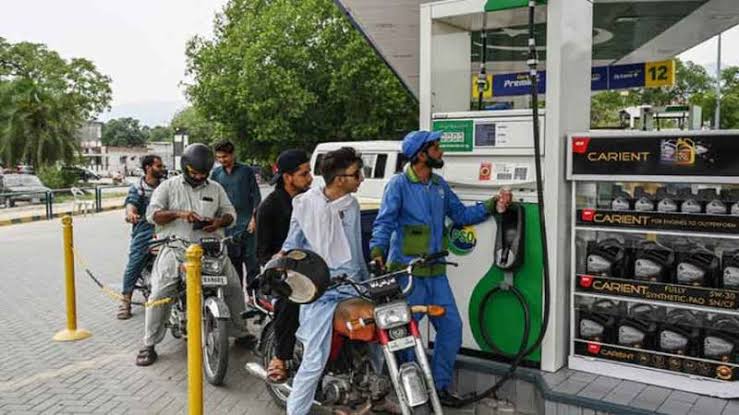
The federal government increased the prices of petrol and high-speed diesel (HSD), adding to fuel costs for consumers across Pakistan. The petrol has become more expensive by Rs0.39 per litre, while the price of HSD has increased by Rs2.40 per litre.
The revised prices will take effect from August 25. Petrol will now be available at Rs341.98 per litre, while the price of high-speed diesel has been fixed at Rs370.69 per litre.
The government continues to impose Rs114 per litre in taxes and duties on petrol, while diesel carries Rs100 per litre in taxes and duties. The latest adjustment comes amid continued fluctuations in international oil markets.
The increase in diesel prices is particularly significant because HSD is widely used by heavy transport, power plants and large generators. Any increase can therefore raise transportation and operating costs across several sectors of the economy.
Despite the latest increase, current fuel prices remain considerably lower than the record levels witnessed earlier this year. HSD had reached a peak of Rs520.35 per litre on April 3 after rising from Rs281 per litre following the outbreak of the US-Iran conflict on February 28.
Petrol had also climbed to Rs458.41 per litre on April 3 after beginning its upward movement from Rs266 in the first week of March.
Daily Fuel Price Mechanism
The latest revision comes after Petroleum Minister Ali Pervaiz Malik announced that fuel prices would be determined on a daily basis in response to international market fluctuations.
The government assigned the Oil and Gas Regulatory Authority (Ogra) responsibility for determining fuel prices according to international market trends. Previously, fuel prices had generally been revised on a weekly basis.
Petrol prices directly affect private vehicle owners, small vehicles, rickshaws and motorcycles, making even minor increases important for middle- and lower-middle-income households.
Diesel prices have a broader economic impact because of their extensive use in transportation, electricity generation and commercial activities. Petrol and HSD are also major sources of government revenue, with monthly sales estimated at around 700,000 to 800,000 tonnes, compared with roughly 10,000 tonnes of monthly kerosene demand.