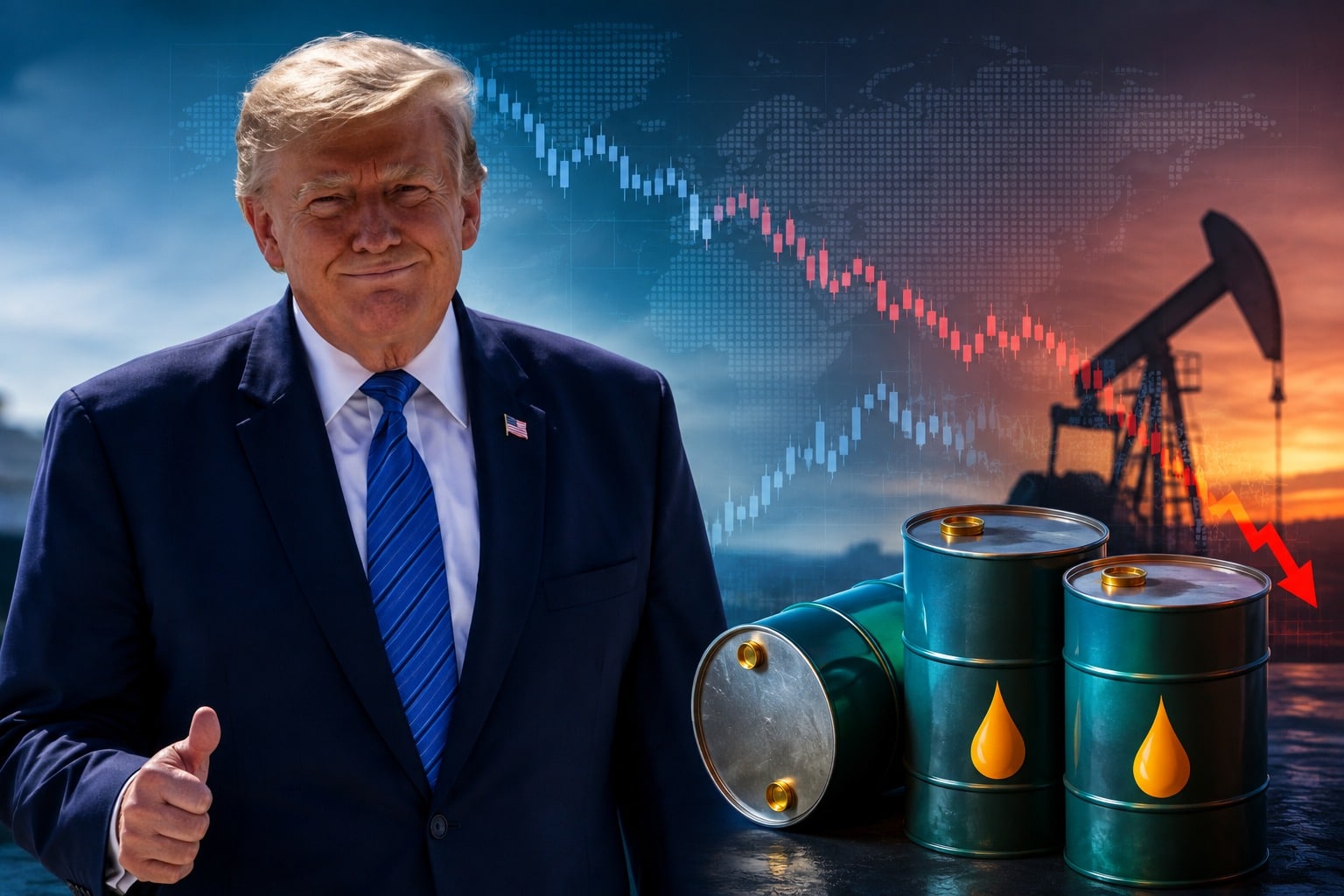
ISLAMABAD: Global oil prices fell by around 2% on Sunday after US President Donald Trump announced he was suspending planned military action against Iran, easing immediate concerns over a wider conflict in the Middle East.
The announcement reduced fears of potential disruptions to oil shipments through the Strait of Hormuz, prompting traders to trim part of the geopolitical risk premium that had driven crude prices higher in recent weeks.
Brent crude, the international benchmark, traded at around $87.8–$88.0 per barrel, down roughly 1.5% to 2% from levels above $89 before Trump’s statement. Meanwhile, US West Texas Intermediate (WTI) crude declined 1.7% to 2.3%, trading between $84.2 and $84.5 per barrel.
Markets reacted after Trump said the United States would postpone planned military strikes against Iran to allow more time for diplomacy, lowering the immediate risk of supply disruptions in one of the world’s most important energy transit routes.
Despite Sunday’s decline, oil prices remain elevated as uncertainty continues to surround relations between Washington and Tehran. Analysts said the absence of a formal agreement, combined with ongoing security concerns in the Gulf, continues to support crude prices.
The Strait of Hormuz remains a key focus for energy markets, with shipping risks and the possibility of renewed military escalation keeping a significant geopolitical premium embedded in oil prices.
Even after the latest pullback, Brent crude remains more than 20% higher than before the latest phase of the US-Iran tensions, reflecting persistent concerns over regional stability.
Investors are also awaiting the outcome of the OPEC+ ministerial meeting later on Sunday, where the producer alliance is widely expected to approve another increase in oil production for September.
Also Read: Trump Puts Planned Strike on Iran on Hold Pending Deal
While additional supply could help ease pressure on prices, market analysts believe geopolitical developments in the Middle East will remain the primary driver of global oil markets in the near term.