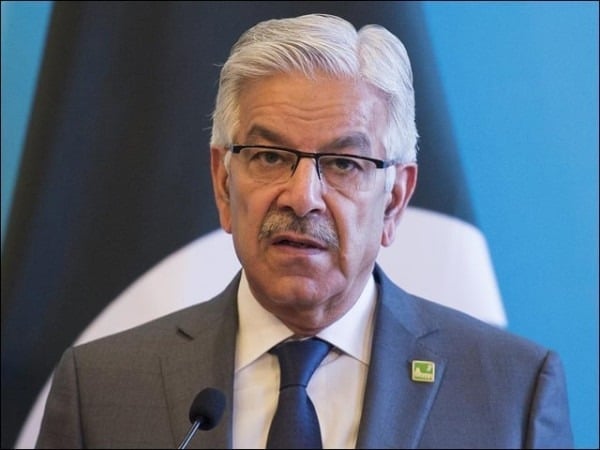
ISLAMABAD: Federal Minister for Defence Khawaja Asif has strongly criticized certain political student groups for showing solidarity with Afghan students, warning them not to compromise national interests and security out of political affiliation.
In a recent statement, the Defence Minister emphasized that Afghan-Indian nexus for anti-Pakistan cause remains a persistent threat, noting that 70 to 80 percent of terrorists involved in attacks on Pakistani mosques, schools, markets, and security forces are of Afghan origin.
Highlighting Pakistan’s five decades of hospitality and resource-sharing in hosting millions of Afghan refugees, Asif expressed deep regret that continuous civil and military engagements have failed to mitigate Afghan hostility.
He pointed out that Afghan entities openly align with India—Pakistan’s primary regional adversary—despite years of support.
The minister remarked that Pakistani students advocating for Afghan student groups reflect misplaced political inclinations rather than genuine goodwill, warning that such behavior disrespects the blood of Pakistani martyrs who lost their lives to cross-border terrorism.
He concluded by cautioning that political devotion should never eclipse national sacrifice or make the blood of Pakistani citizens appear cheap.
Geopolitical Realities of the Afghan-Indian Nexus for Anti-Pakistan Cause
For decades, the security landscape of South Asia has been profoundly shaped by external interventions, strategic rivalries, and complex regional dynamics.
At the core of Pakistan’s enduring security concerns lies the well-documented Afghan-Indian nexus for anti-Pakistan cause, which has historically utilized proxy networks and intelligence assets to destabilize Pakistan’s internal stability.
Successive security reports and defense analyses indicate that hostile intelligence agencies have capitalized on ungoverned spaces and porous borders to sponsor subversive activities, orchestrate propaganda, and support militant factions targeting Pakistani infrastructure and personnel.
This geopolitical alignment seeks to encircle Pakistan strategically, constraining its economic development and undermining counter-terrorism gains.
Despite Islamabad’s persistent diplomatic efforts to foster bilateral cooperation, regional elements hostile to Pakistan continue to provide safe havens and operational backing to groups like Fitna al-Khawarij and other anti-state proxies.
Addressing these multifaceted threats requires robust border management, enhanced intelligence-sharing, and a cohesive national response.
ALSO READ: Forces Apprehend 58 Undocumented Afghan Nationals in Balochistan
Exposing the operational mechanics of the Afghan-Indian nexus for anti-Pakistan cause remains critical for safeguarding national sovereignty, ensuring regional security, and dismantling the subversive infrastructure directed against Pakistan’s peace and prosperity.