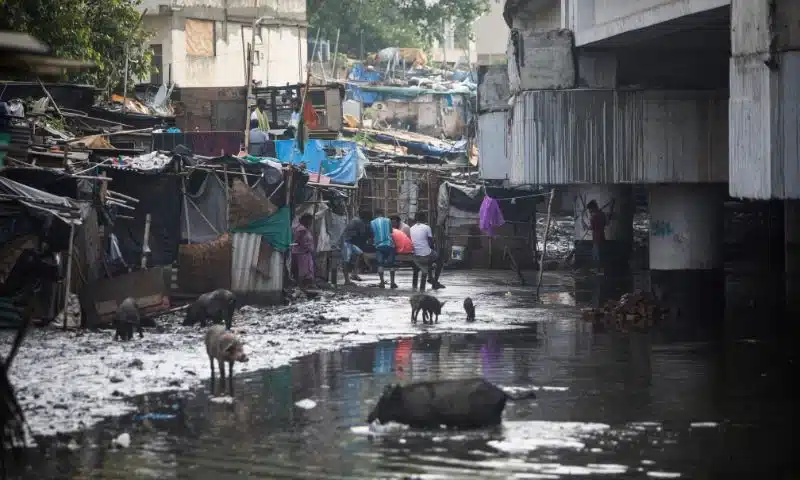
NEW DELHI: New Delhi Hid Slums From BRICS leaders as large curtains, screens and temporary barriers were placed along parts of the routes used by visiting foreign dignitaries, concealing low-income neighbourhoods and informal settlements from view.
The measures have sparked criticism and renewed debate over poverty, urban inequality and the image India seeks to project during a major international gathering. Critics argue that the barriers create a carefully managed view of the capital for visiting leaders while keeping some of the city’s poorest communities out of sight.
The issue has attracted additional attention because Chinese President Xi Jinping and Russian President Vladimir Putin are among the prominent leaders attending the BRICS summit in New Delhi. The international gathering has prompted extensive security arrangements, traffic restrictions and preparations across the capital.
New Delhi Hid Slums From BRICS Leaders as Poverty Debate Grows
The controversy extends beyond the temporary curtains and barriers. It has highlighted the difficult living conditions faced by millions of people residing in informal settlements across Indian cities.
Delhi is home to hundreds of recognised and informal slum settlements. Estimates cited by organisations working with low-income communities have placed the number at around 750 settlements, with roughly two million people living in them. However, determining an exact figure is difficult because settlements change over time and official definitions differ.
Many residents of these communities form an important part of Delhi’s urban workforce. Construction workers, domestic workers, street vendors, drivers, sanitation workers and employees in small businesses contribute to the functioning of the capital every day.
BRICS Summit Puts Delhi’s Inequality Under Spotlight
The timing of the controversy has made the issue particularly prominent. The BRICS summit is intended to showcase the growing influence of major emerging economies and strengthen cooperation among countries representing a significant share of the global population and economy.
India has also used the event to highlight its growing diplomatic, economic and strategic importance on the international stage.
However, the presence of barriers along routes used by foreign dignitaries has prompted questions about whether the international image of New Delhi is being presented selectively.
Questions Over India’s Spending Priorities
The controversy has also raised broader questions about India’s public spending priorities.
According to the figures cited in the original report, India’s 2026–27 Union Budget allocated approximately $82.2 billion to the Ministry of Defence, making it the largest ministry allocation. The Ministry of Rural Development received around $18.5 billion.
Defence capital expenditure was separately budgeted at approximately $22.9 billion, with funding directed towards military modernisation and equipment acquisition.
For residents of informal settlements, the debate is less about India’s global ambitions and more about whether sufficient public resources are reaching communities struggling with housing, sanitation and other basic necessities.
The temporary barriers may conceal impoverished neighbourhoods from passing motorcades, but they do not remove the underlying social and economic challenges facing Delhi.
As India seeks to project an image of a modern and influential global power, the controversy surrounding the hidden settlements has once again placed urban inequality and poverty in the spotlight.