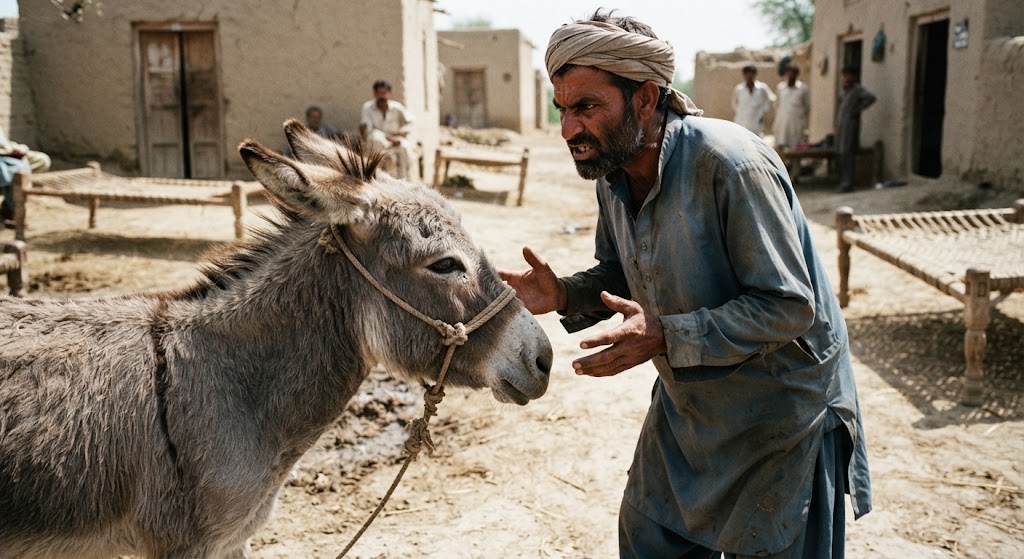
LAHORE: In a bizarre and brutal incident in a suburban area of Lahore, a man mercilessly killed a donkey with repeated axe blows over a bizarre dispute.
According to local reports and a police complaint filed by the owner, Muhammad Hussain, the suspect—identified as Muhammad Ali—flew into a rage after reportedly spotting Hussain’s donkey with his own female donkey while returning home late at night.
Overcome with anger, Ali attacked the helpless animal with an axe, paying no heed to its innocence.
Hussain rushed the severely injured animal to a veterinarian, but the wounds were too deep and fatal for the donkey to survive.
The cruel and senseless act has drawn widespread outrage and condemnation from local residents.
Incidents involving the brutal killing or severe abuse of animals over petty disputes, neighborhood feuds, or misplaced notions of honor reflect a deeply disturbing trend in society.
Beyond individual acts of cruelty, these bizarre occurrences often stem from displaced anger, where vulnerable, voiceless creatures become the victims of human frustration.
In various rural and urban pockets, cases have emerged where livestock or pets are severely harmed or killed over minor trespasses, personal rivalries, or trivial arguments between neighbors. Such horrifying acts highlight a profound lack of empathy, emotional regulation, and basic moral restraint among perpetrators.
The psychological underpinnings of these violent outbursts point toward a broader societal concern regarding impulse control and the normalization of aggression.
Animals, lacking any agency in human disputes, frequently bear the brunt of sudden, explosive rage.
Psychologists and criminologists have long noted a dangerous correlation between cruelty toward animals and wider patterns of societal violence, warning that unpunished or overlooked abuse against domestic creatures can foreshadow aggressive behavior directed at humans.
Compounding the tragedy is often the inadequacy of legal frameworks or weak enforcement of animal welfare laws.
While animal rights legislation exists on paper in many regions, penalties are frequently too lenient to serve as a meaningful deterrent against such savage acts.
ALSO READ: Video of ‘Black Magic’ During Match Sparks Controversy
Addressing this grim reality requires a multi-pronged approach: stricter enforcement of animal cruelty laws, robust legal penalties for offenders, and community-wide awareness campaigns aimed at fostering compassion, ethical treatment of animals, and better mental health resources for managing anger and conflict peacefully.