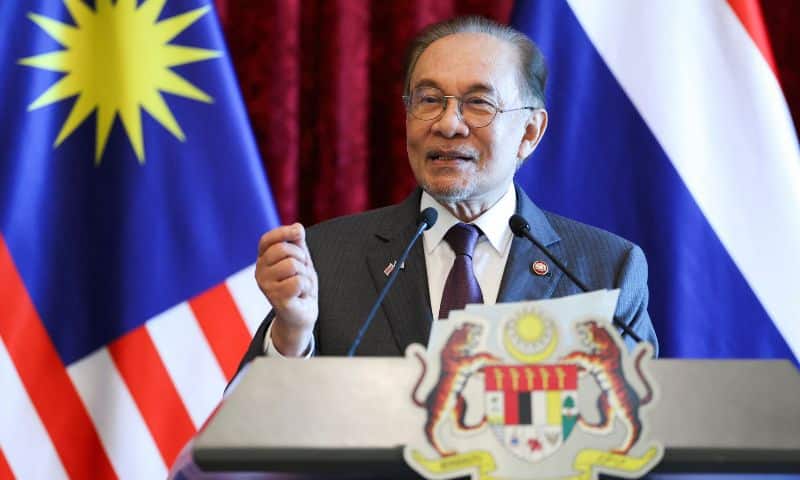
ISLAMABAD: Malaysian PM Refuses to Back India Over Pahalgam Allegations, declining to endorse New Delhi’s characterisation of Pakistan as a state sponsor of terrorism and saying Malaysia’s intelligence establishment has not provided evidence establishing such a claim.
Malaysian Prime Minister Anwar Ibrahim made the remarks during an interview with NDTV journalist Vishnu Som, who questioned him about alleged terrorist attacks in India and attempted to draw a comparison between Pakistan and Israel.
Anwar acknowledged that terrorist attacks had occurred but maintained that allegations of state-sponsored terrorism required credible evidence. He said Malaysia’s intelligence authorities had not provided him with information that would allow him to make such a conclusion about Pakistan.
The exchange has attracted attention because of Malaysia’s relations with both India and Pakistan and Anwar’s efforts to maintain a balanced diplomatic position between the two countries.
Malaysian PM Refuses to Back India Over Pahalgam Allegations
During the interview, Som asked Anwar whether he considered Israel’s actions against Hamas to constitute state terrorism. The Malaysian prime minister agreed with that description.
The interviewer then sought to apply the same characterisation to Pakistan over the Pahalgam attack and other alleged incidents involving India.
Anwar rejected the comparison, indicating that he would not go to that extent.
The Malaysian leader also highlighted his relationship with Indian Prime Minister Narendra Modi while noting that Malaysia continues to engage with Pakistan.
Anwar said Malaysia believed the disputes between India and Pakistan could be resolved, signalling Kuala Lumpur’s preference for dialogue rather than adopting a confrontational position.
Anwar Draws Line Between Terrorism and State Sponsorship
One of the most significant aspects of the interview was Anwar’s distinction between terrorist incidents and claims of state involvement.
The Malaysian premier acknowledged that terrorist acts had taken place. However, he said his government had not received intelligence establishing that Pakistan was responsible for state-sponsored terrorism.
Anwar referred specifically to Malaysia’s intelligence establishment and its engagement with India. He said the information available to Malaysian authorities had not produced evidence that would enable him, as prime minister, to make the accusation being sought by the interviewer.
His response effectively placed emphasis on evidence and intelligence assessments rather than political claims.
Pakistan Has Rejected Allegations
Pakistan has consistently rejected allegations linking the country or its state institutions to the Pahalgam attack.
Following the incident, Islamabad called for an investigation and maintained that no credible evidence had been shared with Pakistan establishing its involvement.
Pakistan has also offered support for an international, transparent and neutral investigation into the incident.
The issue became particularly sensitive as tensions between India and Pakistan increased following the attack, with both sides exchanging accusations and taking diplomatic and security measures.
Malaysia’s position has therefore been closely watched because of its longstanding relations with both South Asian countries.
Malaysia Maintains Relations With Both Countries
Anwar’s comments reflect Malaysia’s attempt to maintain diplomatic engagement with both New Delhi and Islamabad.
The Malaysian prime minister has previously indicated that Kuala Lumpur is willing to contribute to efforts aimed at reducing tensions between India and Pakistan.
Rather than accepting one side’s narrative outright, Malaysia has emphasised dialogue, evidence and peaceful dispute resolution.
Also Read: India Silencing Dissenting Voices After Staged Pahalgam Attack
Anwar’s latest comments are consistent with that approach. While acknowledging India’s concerns about terrorism, he stopped short of endorsing the claim that Pakistan was responsible for state-sponsored terrorism.
Diplomatic Importance of Anwar’s Remarks
The statement is significant because allegations of state-sponsored terrorism can have serious diplomatic consequences. A direct endorsement by another government could potentially influence international perceptions and bilateral relations.
Instead, Anwar maintained that his government’s position would be guided by available intelligence and facts.
For Pakistan, the remarks provide diplomatic reassurance that Malaysia is not prepared to accept allegations against Islamabad without supporting evidence.
For India, the comments highlight the challenge of securing universal international backing for its interpretation of the Pahalgam incident.
The episode also demonstrates the complexity of diplomacy between India and Pakistan, where international partners often seek to maintain relationships with both countries while encouraging them to resolve disputes through dialogue.
Anwar’s position ultimately underscores the importance of credible evidence when governments make serious allegations against one another. His refusal to equate Pakistan with Israel over state terrorism allegations indicates that Malaysia intends to maintain an independent diplomatic position while continuing engagement with both New Delhi and Islamabad.