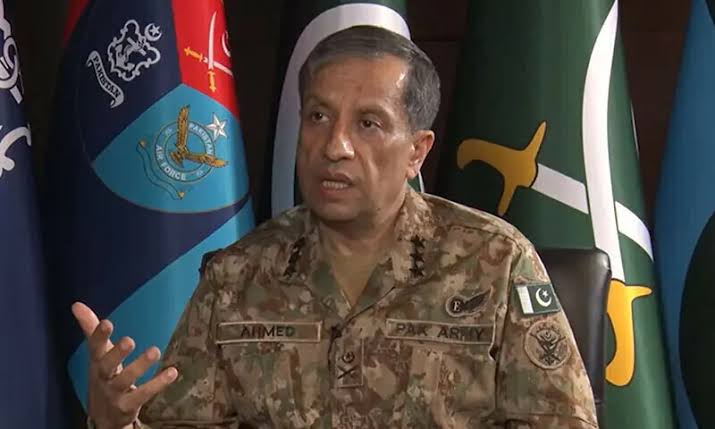
ISLAMABAD: Inter-Services Public Relations (ISPR) Director General Lt Gen Ahmed Sharif Chaudhry has said the Makkah Joint Defence Agreement between Pakistan, Saudi Arabia and Türkiye is purely defensive, has no regional ambitions and is not directed against any country.
Speaking to Al Arabiya English in a special interview, Chaudhry said the agreement aims to strengthen collective deterrence, defence cooperation and regional stability.
“There is nothing aggressive. There are no regional aspirations. It is a collective deterrence,” he said, adding that the pact contained “no offensive, no interference, no aggressive element.”
The military spokesperson said the agreement should not be viewed as a new bloc competing with existing alliances or partnerships. Instead, he described it as complementary to the three countries’ independent relations with other states, alliances and international groupings.
Pact does not replace ties with China
Chaudhry also rejected the idea that the agreement could undermine Pakistan’s longstanding strategic relationship with China.
He said Pakistan’s ties with Saudi Arabia and Turkiye were longstanding and deeply rooted, while its relationship with Beijing remained equally important. The latest agreement, he added, formalised existing partnerships rather than replacing or competing with other relationships.
“Nobody has any problem with that, everyone understands that this is defensive, everyone understands it is for maintaining stability and peace in the region,” he said.
He also rejected descriptions of the arrangement as a “Muslim strategic alliance”, saying it was instead focused on regional peace, security and stability.
“It’s not a club that has been made for Muslim countries only,” he said.
According to Chaudhry, the three countries could eventually expand the arrangement to include other willing partners that share their stated principles of non-aggression, non-interference and collective deterrence.
Operational details remain confidential
Asked how Pakistan would respond if one of its partners came under attack, Chaudhry said the practical mechanism for implementing the defence commitments had not been publicly disclosed.
He said the three countries would assess any such situation and decide the appropriate course of action. However, he stressed that sensitive operational details could not be made public.
The spokesperson said defence cooperation involved information that had to remain at a specific level because of its sensitive nature.
Pakistan seeks mediation in Iran-US conflict
The DG ISPR also highlighted Pakistan’s policy of maintaining relations with multiple partners, saying it gave Islamabad a role in efforts to mediate between Tehran and Washington.
“The only solution to the Iran-US war is mediation efforts; no one in the region wants to see a war. As a mediator, we will continue our efforts for peace,” he said.
Pakistan vows continued counterterrorism operations
The DG ISPR also reiterated Pakistan’s resolve to continue counterterrorism operations against attacks that Islamabad says originate from Afghan territory.
He further warned that any escalation with India could have serious consequences.
“If India continues its actions under the pretext of ‘Akhand Bharat,’ the consequences will be far more severe than India can imagine,” Chaudhry said.
He added that Pakistan would respond if attacked and said its response would impose significant costs on an adversary.
The remarks came as attention remains focused on defence cooperation between Pakistan, Saudi Arabia and Turkiye. While the three countries have deepened cooperation across several areas, Chaudhry said specific mechanisms for implementing sensitive defence commitments would remain undisclosed.