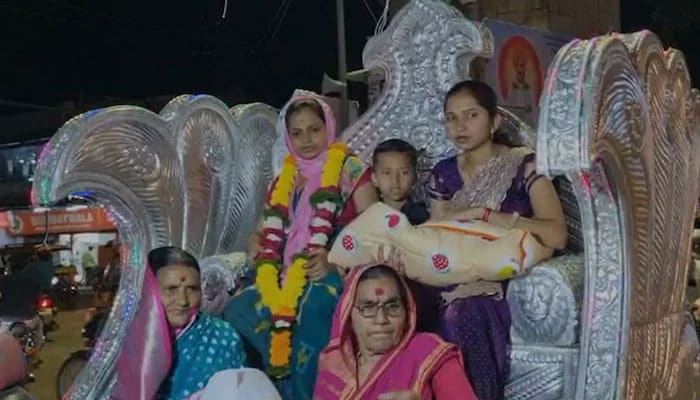

MUMBAI: A family in the Indian state of Maharashtra celebrated a historic milestone by hosting grand festivities and welcoming their newborn baby girl like a princess after 200 years.
According to Indian media reports, a family in the Beed district of Maharashtra claimed that they had been awaiting the birth of a daughter for nearly five generations, marking a profound moment of joy for their household.
The newborn baby girl arrived after nearly two centuries without a female child in the lineage, prompting relatives and a large gathering of locals to participate enthusiastically in the celebrations.
The infant’s grandfather became emotional while speaking to the media, expressing profound gratitude that their long-standing wish had finally been fulfilled.
The grandmother shared her overwhelming happiness, welcoming the newborn baby girl as a blessing to the household, while the father emphasized that daughters bring a unique and unmatched joy to life.
The family stated that the grand celebration also aimed to deliver a positive social message, reminding society that the birth of a newborn baby girl is a profound occasion of pride and happiness that should be cherished equally.
Societal Pressures and Cultural Factors Influencing Gender Preference
The overwhelming public and familial reaction in certain traditional communities regarding the birth of a female child often stems from deeply entrenched patriarchal structures and historical son preference.
In various rural and semi-urban pockets across South Asia, enduring socio-economic dynamics dictate family planning. Sons have traditionally been viewed as primary breadwinners, heirs to ancestral property, and caregivers for aging parents due to patrilocal living arrangements.
Conversely, daughters were historically burdened by heavy dowry expectations and social restrictions, which historically skewed community values toward favoring male offspring.
These cultural pressures have contributed to demographic imbalances in specific regions over generations.
However, changing educational paradigms, urbanization, and government-led awareness campaigns are steadily transforming societal attitudes.
Modern families increasingly recognize that daughters achieve equal or greater professional and personal milestones, proving just as capable of supporting their households and communities.
ALSO READ: 19-Year-Old Indian Youth Dies After Three-Hour Rescue Effort at Maharashtra Hill
Celebrating the arrival of a daughter serves as an important cultural counter-narrative, actively working to dismantle outdated biases and foster a more equitable, progressive mindset across society.