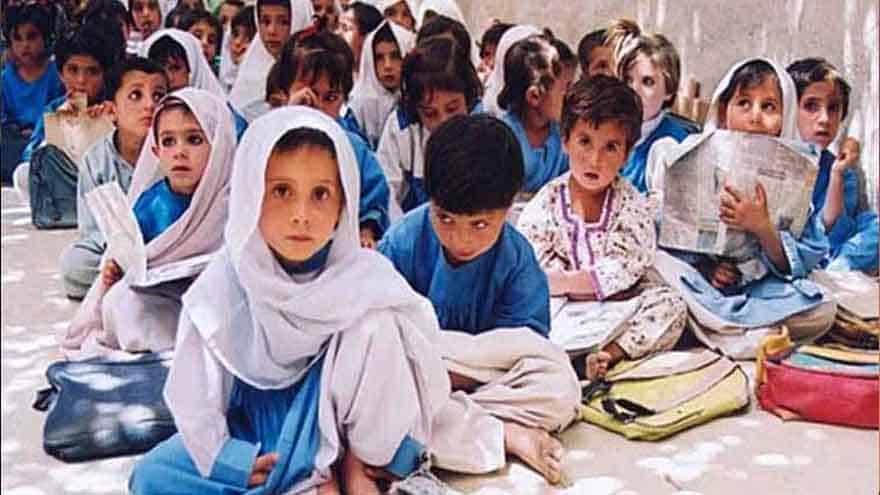
PESHAWAR: The Khyber Pakhtunkhwa government has decided to conduct a province-wide door-to-door census of out-of-school children (OOSC) as part of a comprehensive initiative to bring them into the formal education system.
The decision was announced during a meeting attended by Chief Minister Sohail Afridi, where a memorandum of understanding (MoU) was signed among the provincial education, local government, health and social welfare departments.
The four departments will work together under a coordinated strategy to identify children who are currently out of school and develop measures to facilitate their enrollment and continued education.
In this regard, approximately 4.9 million children between the ages of five and 16 live in the province, of whom around 2.6 million are currently out of school.
A One Map system will also be developed to compile information about out-of-school children. The system is expected to help authorities identify areas with high numbers of children outside the education system and formulate targeted enrollment strategies.
The government has set an initial target of enrolling 60 percent of out-of-school children in educational institutions. To achieve this objective, authorities will utilize government schools, community schools and double-shift schools to expand access to education.
The initiative will also focus on children who have dropped out because of poverty. According to the briefing, such children will be provided scholarships and social assistance to help their families meet education-related costs.
In addition, young people between the ages of 14 and 16 will be offered technical and vocational training opportunities. The measure is aimed at equipping them with practical skills that could improve their prospects for employment and economic independence.
The initiative represents a coordinated attempt by the provincial government to address the large number of children currently outside schools through data-based planning, financial support, expanded educational facilities and vocational training.