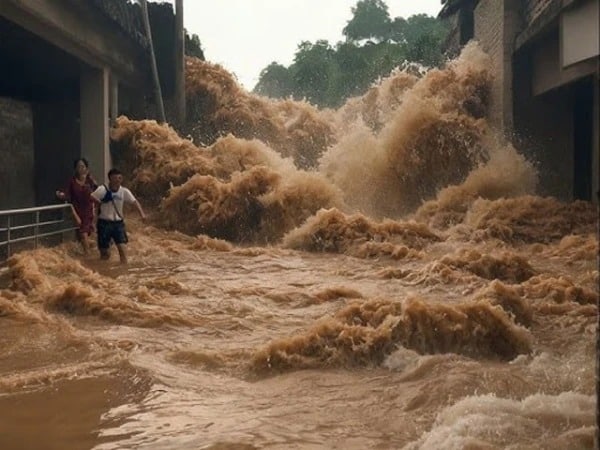
KHATMANDU: A massive and sudden flash flood accompanied by heavy mudslides has wreaked havoc along the mountainous Nepal-Tibet border, triggering widespread destruction.
According to reports from the Nepal Tourism Board, the disaster has claimed at least 31 lives, while hundreds of tourists and local residents remain missing.
The missing individuals include over 100 Indian nationals and 12 British citizens, alongside travelers from various other countries who were caught unawares by the raging torrents.
Disturbing CCTV footage emerging from Tibet captures massive walls of mud and water violently crashing into border-crossing infrastructure.
Sometimes Nature Cruelty hits differently pic.twitter.com/J0j6PG7Haa
— Aashish (@aashishqi) August 26, 2026
Concurrently, visual records from Nepal depict terrified citizens sprinting toward higher ground as surging torrents sweep away residential structures, bridges, and vehicles.
Nepalese officials have indicated that an earthquake-induced avalanche in the high-altitude Himalayan terrain may have triggered the sudden flooding, though formal investigations are still underway to determine the exact catalyst.
Across the border, Chinese authorities have treated the emergency with extreme gravity, with top leadership issuing direct instructions to mobilize comprehensive rescue operations.
Local authorities emphasize that rugged geographical terrains, compromised communication links, and persistent severe weather continue to pose severe impediments to rescue teams trying to reach isolated zones.
Relief operations involving military helicopters and specialized personnel remain active, though fears persist that the final death toll could rise significantly.
Risk of Glacial Lake Outburst in NEPAL 🇳🇵
As Rasuwa has received less than 7 mm of rainfall in the last 24 hours, local rain is not considered the cause of the flood. Officials suspect that a Glacial Lake Outburst Flood (GLOF) in Tibet caused a sudden surge of water into the…
— Sahil Patel (@SahilpatelCA) August 26, 2026
Understanding the Escalation of Flood Fatalities and Climate Vulnerability in Asia
The devastating catastrophe along the Himalayan frontier highlights a grim and recurring pattern of extreme weather events across the continent.
The broader context of flood fatalities in Asia reflects an escalating humanitarian and ecological challenge driven by shifting climate paradigms, glacial melting, and erratic monsoon behaviors.
Throughout the region, vulnerable river basins and densely populated valleys face heightened risks as global temperature increments accelerate the destabilization of high-altitude glacial lakes.
When sudden cloudbursts, seismic tremors, or unseasonal thaws occur, they often trigger catastrophic outburst floods that travel downstream with terrifying speed, obliterating remote infrastructure, settlements, and vital hydropower projects before early-warning systems can react.
Mitigating these recurring tragedies requires a robust, transnational framework for disaster risk reduction.
Governments across South and East Asia must heavily invest in real-time satellite monitoring of glacial lakes, advanced hydro-meteorological early-warning networks, and climate-resilient civil engineering.
Furthermore, cross-border data-sharing agreements between neighboring nations are paramount to ensure timely alerts downstream.
ALSO READ: Heavy Rain in Pakistan as PMD Warns of Urban Flooding, Landslides
Without proactive adaptation, enhanced community preparedness, and sustainable environmental policies, vulnerable mountain communities and seasonal travelers will remain continuously exposed to the escalating fury of extreme hydrological disasters.