
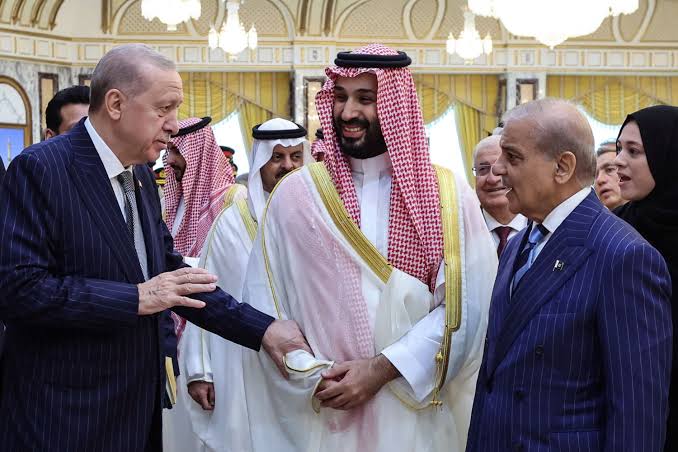
DOHA: Turkish President Recep Tayyip Erdogan has said that keeping the Strait of Hormuz closed is in no party’s interest and that reopening the strategic waterway should be a global priority.
In this regard, Erdogan discussed the worsening security situation in the Gulf and the diplomatic efforts aimed at reducing tensions in the region.
The Turkish president said the disruption of traffic through the Strait of Hormuz was damaging the economies of countries across the region and affecting the wider global economy. He stressed that all sides should work toward restoring normal maritime traffic through the strategically important waterway.
Erdogan also praised Qatar’s diplomatic role in efforts to ease tensions and prevent further escalation.
He described Qatar as an effective mediator that had played an important role in bringing the parties closer to negotiations and supporting diplomatic efforts to resolve the crisis.
The Turkish president also discussed the recently announced defence cooperation involving Türkiye, Saudi Arabia and Pakistan.
He described the partnership as important for regional security and maintaining a balance of power, while indicating that other regional countries could potentially join the framework in the future.
Meanwhile, Iranian Parliament Speaker and chief negotiator Mohammad Bagher Ghalibaf claimed that US President Donald Trump had effectively recognised what Tehran describes as the “Axis of Resistance” by signing what he referred to as the “Islamabad Memorandum of Understanding.”
According to Ghalibaf, Washington had initially pressed Iran to reconsider its positions on its missile and nuclear programmes, its support for regional allies and its stance regarding the Strait of Hormuz.
He claimed that the negotiations ultimately resulted in an understanding in Islamabad and that the United States subsequently ended its blockade of the strategic waterway.
The Strait of Hormuz is one of the world’s most important maritime trade routes and is a major corridor for global energy shipments.
The reported diplomatic developments come amid heightened tensions involving the United States, Iran and other regional powers. Pakistan, Türkiye and Qatar have also been involved in diplomatic efforts aimed at preventing further escalation and encouraging dialogue.
While Tehran has portrayed the reported understanding as a diplomatic success, the reopening of the Strait of Hormuz would have broader implications for international trade and energy markets.
Erdogan’s statements, together with Ghalibaf’s claims, underline the growing importance of regional diplomacy at a time when major powers are seeking to prevent further instability in the Middle East.



