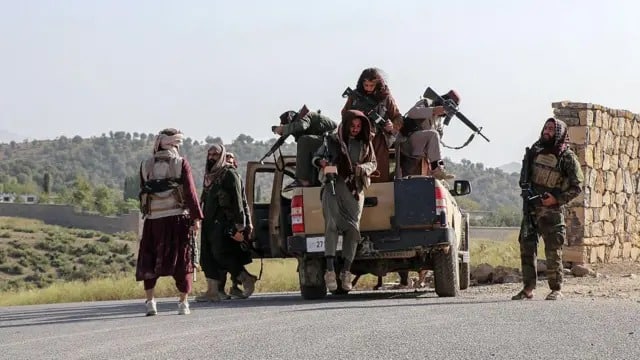
KABUL: Anti-Taliban resistance groups stepped up operations in Afghanistan’s northeastern Badakhshan province during the second half of July, briefly seizing a district headquarters for the first time since the Taliban returned to power in 2021, according to a report by a U.S.-based research organisation.
The report, published by the Long War Journal, a project of the Washington-based Foundation for Defense of Democracies (FDD), said the increase in attacks has placed growing pressure on Taliban forces in the province.
According to the report, the newly formed resistance group Sepahiyan-e-Mihan attacked the headquarters of Yaftal-e-Sufla district on July 17 with around 25 fighters. The group held the district center for several hours before withdrawing.
The report described the operation as the first temporary loss of a district headquarters by the Taliban since they regained control of Afghanistan in August 2021.
The Taliban administration acknowledged that insurgents briefly entered the district center. It said local officials were not present during the attack and claimed security forces later arrested several people involved.
Taliban Army Chief Fasihuddin Fitrat visited the district and repeated the government’s account of the incident.
However, Sepahiyan-e-Mihan leader Qayum Malang rejected the Taliban’s claims in an audio message released on July 22. He said none of the group’s fighters had been arrested.
The report said resistance activity continued across Badakhshan after the district assault.
On July 23, the Afghanistan Freedom Front (AFF) claimed it had captured several Taliban checkpoints in Zebak district and maintained control despite Taliban counterattacks. The group also claimed it shot down two Taliban drones during the fighting.
On the same day, the National Resistance Front (NRF), led by Ahmad Massoud, claimed responsibility for an attack on a Taliban checkpoint in Kuran wa Munjan district. The group said it killed one Taliban fighter and wounded two others.
The report said there was no clear evidence that the resistance groups had conducted joint military operations. However, it noted that growing coordination among the groups could lead to closer cooperation in the future.
It added that Badakhshan is increasingly emerging as a key center of armed resistance against the Taliban.