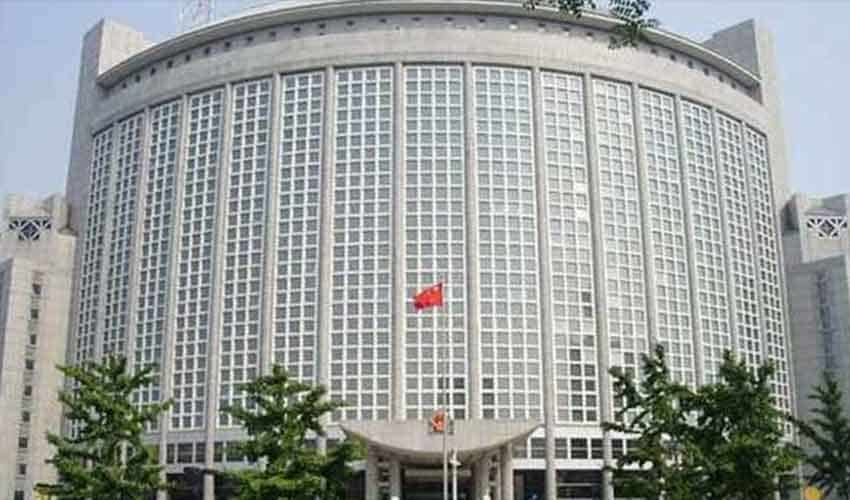
ٰBEIJING: The spokesperson for the Chinese Foreign Ministry has issued a cautionary statement to Japan and India regarding the Japanese Prime Minister’s recent visit to New Delhi.
Responding to a query about the diplomatic visit, the spokesperson emphasized that bilateral cooperation between Japan and India must not target China, nor should it jeopardize the interests of any third country.
This diplomatic warning follows a major escalatory step by Beijing, which recently blacklisted 20 Japanese companies and organizations.
According to international media reports citing the Chinese Foreign Ministry, these Japanese entities face strict export bans on dual-use goods—materials that can be utilized for both military and civilian purposes.
Additionally, China has placed 20 more Japanese institutions on a high-risk watchlist.
These entities will now be subjected to rigorous vetting and must provide additional guarantees before importing sensitive goods.
The Chinese Ministry of Commerce defended the restrictions, stating they were enacted to safeguard national security and fulfill international obligations, while asserting that regular trade relations would remain unaffected.
The Deepening China-Japan Strain
The recent trade restrictions and diplomatic warnings underscore a significant hardening of relations between Beijing and Tokyo.
While historically plagued by territorial disputes over the Senkaku (Diaoyu) Islands in the East China Sea and unresolved wartime grievances, contemporary friction is increasingly driven by modern geopolitical alignments and technological decoupling.
Japan has fundamentally reformed its post-war pacifist posture, shifting toward a robust defense strategy aimed directly at countering China’s growing military footprint and maritime assertiveness in the Indo-Pacific.
Tokyo has tightened its security alliances, most notably through the Quad (comprising Japan, India, the US, and Australia), which Beijing views as a hostile containment strategy.
Furthermore, the friction has bled heavily into the tech and economic sectors.
Aligning with US-led initiatives, Japan has restricted the export of advanced semiconductor manufacturing equipment to China to curb Beijing’s military modernization.
China’s retaliatory blacklisting of Japanese firms handling dual-use goods represents a direct countermeasure in this high-tech trade war.
As Japan deepens its strategic ties with regional powers like India, Beijing is increasingly utilizing economic leverage and regulatory barriers to signal its displeasure, signaling a volatile era of strategic competition between Asia’s two largest economies.