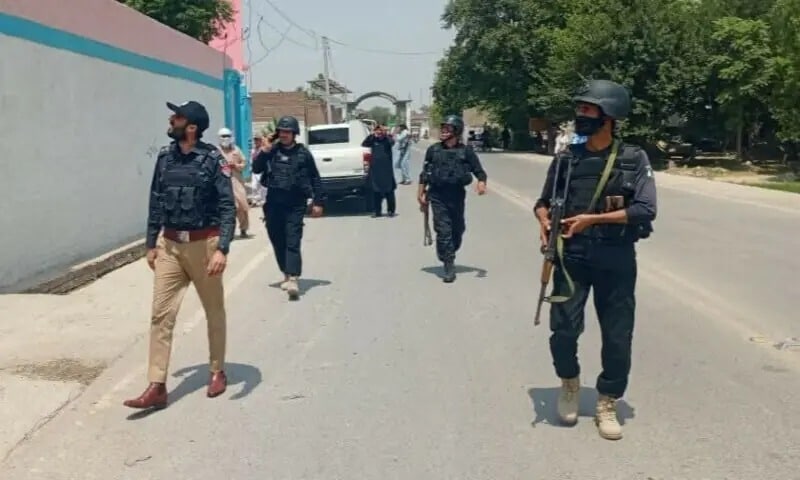
Bannu: An explosive device detonated at a government girls’ school in the Khairaki area of Bannu, according to local police.
The explosives had been planted on the exterior portion of the building, and the impact of the blast caused the school’s outer wall to collapse.
Police confirmed that while more than 80 female students are enrolled at the institution, the building was completely empty at the time of the explosion due to ongoing summer vacations.
Following the incident, law enforcement authorities have heightened security across the area.
The Toll of Militancy on Lives and Infrastructure in KP
Khyber Pakhtunkhwa (KP) has historically borne the heaviest brunt of Pakistan’s war against terrorism, a grim reality that has dramatically escalated in recent years.
The resurgence of militant groups, particularly after regional geopolitical shifts, has unleashed a devastating wave of violence directly targeting the civilian population, public infrastructure, and the socioeconomic fabric of the province.
The human cost of this persistent conflict is staggering.
Thousands of civilians, including local elders, political workers, and minority communities, have lost their lives in targeted killings, suicide bombings, and improvised explosive device (IED) blasts.
Public spaces like crowded marketplaces, mosques, and courts are frequently struck, turning daily civilian life into a struggle for survival and instilling widespread psychological trauma across generations.
Simultaneously, the deliberate destruction of public property and vital infrastructure remains a core strategy of these insurgent outfits.
Educational institutions, especially girls’ schools, are routinely bombed or set ablaze to enforce retrogressive ideologies, depriving thousands of youth of their fundamental right to education.
Beyond schools, militants heavily target telecommunication towers, healthcare clinics, police stations, and critical energy corridors.
This systematic sabotage is designed to paralyze local governance, disrupt essential public services, and isolate vulnerable communities.
The economic fallout is equally catastrophic. Persistent insecurity has caused severe capital flight, choked local businesses, halted development projects, and destroyed the region’s immense tourism potential.
For the people of KP, this relentless onslaught represents not just a security crisis, but a profound humanitarian tragedy that continues to bleed their economy, shatter families, and destroy the essential infrastructure required for a stable future.