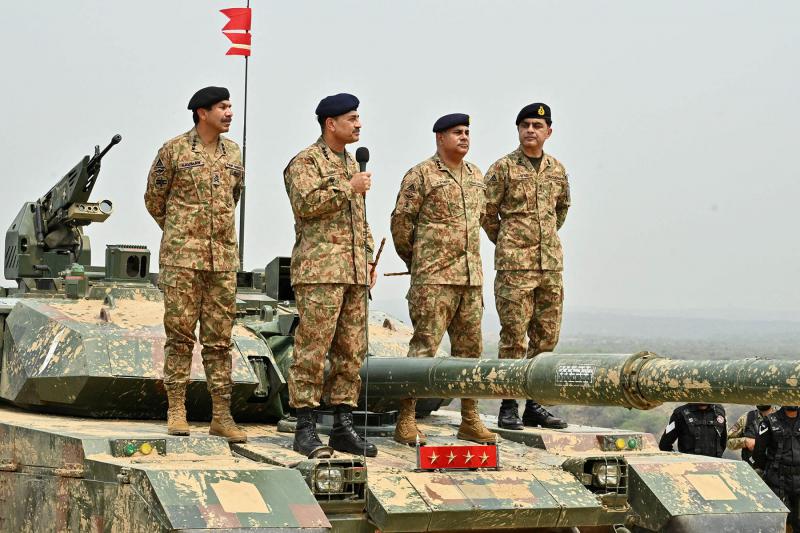
WASHINGTON: Pakistan’s military operation “Ghazab-ul-Haq” against terrorist networks in Afghanistan has gained widespread international recognition.
Pakistan is successfully targeting the safe havens and military infrastructure of terrorist groups operating within Afghanistan.
The prominent American magazine The Diplomat praised Pakistan’s excellent operational strategy against the Afghan Taliban and Fitna-al-Khawarij, noting that the campaign against cross-border terrorist networks has entered a decisive new phase.
Over the past few months, Pakistan has tightened the noose around both terrorist networks and their facilitators.
The core objective of Operation Ghazab-ul-Haq is to permanently degrade these networks along the Pak-Afghan border regions.
According to The Diplomat, Fitna-al-Khawarij and Fitna-al-Hindustan continue to launch terrorist activities into Pakistan from Afghan soil, with Afghan Taliban commander Mullah Muhammad Zai Akhund overseeing the training and logistics for Fitna-al-Khawarij in Kandahar.
International think tanks describe Operation Ghazab-ul-Haq as a crucial strategic counter-terrorism initiative that successfully disrupts the Afghan Taliban’s backing of Fitna-al-Khawarij.
Experts emphasize that the operation has led to a sharp decline in terrorist incidents across Pakistan, providing clear evidence of its strategic success.
Global Security Concerns Over Militant Havens in Afghanistan
The international community remains deeply alarmed by the growing footprint of transnational militant networks operating inside Afghanistan.
Following the change in governance, regional neighbors and global powers have raised urgent warnings regarding the country transforming into a central hub for regional instability.
Major global concerns focus on the unchecked operations of various outlawed factions.High-profile groups such as the Tehrik-e-Taliban Pakistan (TTP), the Islamic State Khorasan Province (ISKP), Al-Qaeda, and the East Turkestan Islamic Movement (ETIM) continue to utilize Afghan territory to recruit, train, and plan cross-border operations with relative impunity.
This security vacuum has directly escalated geopolitical friction, particularly along the volatile Pakistan-Afghanistan borderlands.
Consequently, international bodies like the United Nations Security Council have consistently demanded that local authorities honor their counter-terrorism commitments and prevent Afghan soil from being used to launch global security threats.