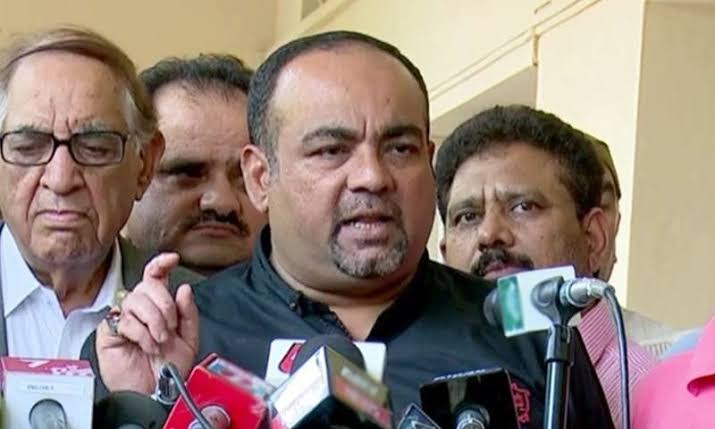
KARACHI: Senior leader of the Muttahida Qaumi Movement-Pakistan (MQM-P), Khawaja Izharul Hassan, has strongly demanded a complete rollback or significant revision of the 18th Constitutional Amendment, asserting that the legislation has inadvertently transformed Pakistan’s provinces into independent states within a state.
Speaking passionately during a legislative floor session, Izhar ul Hassan argued that instead of genuinely devolving administrative and financial authority to the grassroots level, the amendment has resulted in a hyper-centralization of absolute power within the provincial capitals.
He emphasized that the current framework severely undermines the authority of the third tier of governance—the local government systems—leaving major urban and economic engines like Karachi completely marginalized and structurally disenfranchised.
The 18th Amendment and the Struggle for Devolution
Passed in April 2010 with historic multi-party consensus, the 18th Constitutional Amendment was designed to redefine Pakistan’s federal structure by vastly enhancing provincial autonomy.
It fundamentally shifted the balance of power by abolishing the concurrent legislative list, transferring key ministries—including education, healthcare, and local governance—directly to the provinces, and significantly reducing the discretionary powers of the federal executive.
Furthermore, it anchored fiscal decentralization through the National Finance Commission (NFC) award, ensuring a larger chunk of national revenues went straight to provincial kitties.
Despite these democratic intentions, the amendment has remained a deeply polarising issue in Pakistani politics.Political parties representing urban centers, most notably the MQM-P, argue that provincial administrations have routinely abused this autonomy.
They point out that while provinces demanded power from the federal capital, they consistently failed to implement Article 140-A of the Constitution, which mandates the further devolution of political, administrative, and financial responsibility to elected local bodies.
Consequently, critics view the post-18th Amendment landscape as one that enriched provincial executives while stripping cities of their financial independence and administrative authority.