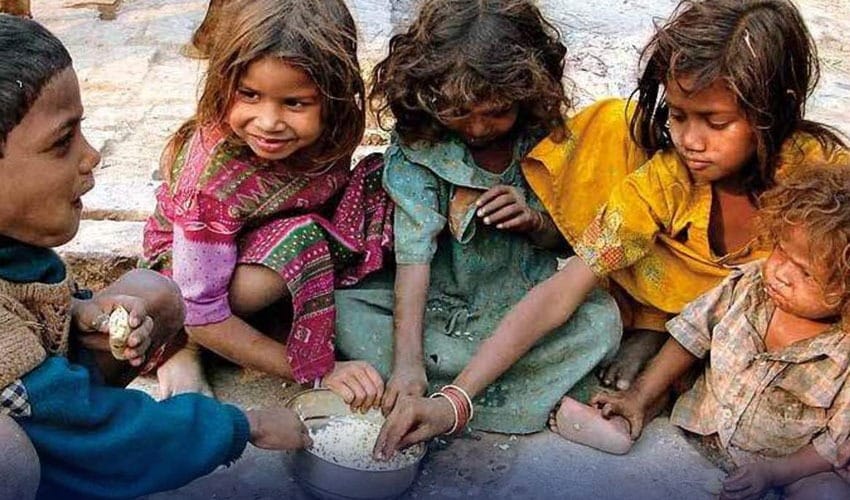
Islamabad: According to the National Economic Survey 2025-26, Pakistan has recorded a significant surge in its poverty rate, which has climbed to 28.9%.
This indicator implies that nearly 29 out of every 100 citizens are currently living below the poverty line.
The Economic Survey defines the national poverty line threshold as an individual monthly income of Rs. 8,483 (equivalent to roughly $30.5 USD).
Anyone earning below this amount is classified as living in poverty.
Regional and Provincial Breakdown:
- Urban vs. Rural: Poverty remains starkly higher in rural areas at 2%, compared to 17.4% in urban centers.
- Balochistan: Records the highest provincial poverty rate at a staggering 47%.
- Khyber Pakhtunkhwa (KP): Stands at 3%.
- Sindh: Stands at 6%.
- Punjab: Records the lowest provincial poverty rate at 3%.
The survey highlights that the overall poverty rate has seen a sharp upward trajectory since 2018-19, when it stood at 21.9%.
Spiraling inflation and persistent macroeconomic pressures have pushed millions of people back under the poverty line while worsening economic inequality across the country.
The standard metric used to measure this poverty line is an individual’s financial capacity to meet minimum essential living expenses.
Factors Behind Poverty and Measures for Improvement
The resurgence of poverty in Pakistan is driven by an intersection of structural economic weaknesses, unprecedented inflation, and climate-induced vulnerabilities.
Chronic fiscal deficits, heavy reliance on imported commodities, and sharp currency devaluations have triggered skyrocketing costs for fuel, electricity, and food, disproportionately squeezing low-income households.
This economic strain is further compounded by low industrial productivity, a stagnant agricultural sector disrupted by frequent erratic weather patterns, and inadequate investment in human capital—leaving a large portion of the rapidly growing workforce without competitive skills or stable employment opportunities.
To effectively reverse this trend and foster sustainable poverty alleviation, Pakistan must transition from short-term financial subsidies to deep-rooted economic reforms.
Key Improvement Measures:
- Agricultural Modernization: Upgrading farming techniques, introducing climate-resilient crops, and providing direct credit to smallholders to revitalize rural economies and ensure food security.
- SME and Skill Development: Expanding technical and vocational training programs tailored to market demands, alongside widening access to microfinance, to empower youth and women toward self-employment.
- Broadening the Tax Base: Reforming the tax structure to reduce heavy reliance on regressive indirect taxes, which unfairly burden the poor, while capturing undocumented revenue sectors.
- Targeted Social Safety Nets: Consolidating programs like the Benazir Income Support Programme (BISP) to dynamically shield the most vulnerable segments from sudden inflationary shocks while integrating exit strategies through asset-transfer initiatives.