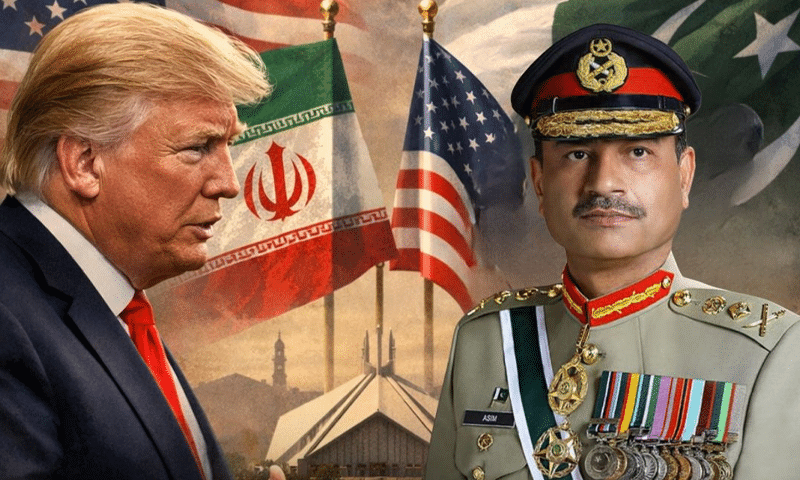
ISLAMABAD: Pakistan’s Chief of Defence Forces Field Marshal Syed Asim Munir has told US President Donald Trump that a blockade of Iranian ports is a major obstacle to peace talks.
The Reuters, citing Pakistani security sources, reported that Filed Marshal, who is acting as a key mediator, said the blockade is hindering dialogue between United States and Iran.
US President Donald Trump, in response, told Pakistan’s Chief of Army Staff that he would consider his advice on the Strait of Hormuz blockade being a hurdle to peace talks with Iran.
Tensions have risen again ahead of possible negotiations. Port blockades, harsh rhetoric, and military skirmishes have put a fragile ceasefire at risk. Despite Pakistan’s mediation, differences remain wide.
US officials want to launch a second round of talks in Islamabad before a two-week ceasefire expires. Authorities in Islamabad have also placed heavy security across the capital.
Iran, however, has ruled out fresh talks for now. A Foreign Ministry spokesman said Washington is insisting on “unreasonable and unrealistic” positions. Iranian officials said the blockade is undermining chances for dialogue. Tehran also made clear its defense capabilities, especially its missile program, are non-negotiable.
The US continues to enforce restrictions on Iranian ports, while Iran has intermittently curbed maritime traffic through the Strait of Hormuz, a key route for nearly 20 percent of global oil and liquefied gas supplies.
Markets have reacted sharply. Oil prices have risen more than 6 percent, while stock markets have seen volatility. Traders fear the ceasefire could collapse and disrupt Gulf trade routes further.
The US military said it targeted an Iranian-flagged cargo vessel on Sunday, disabling its engines. Video released by United States Central Command showed troops boarding the ship from helicopters. Iran condemned the action as “armed piracy” and said the vessel was coming from China. Tehran warned it is ready to respond but exercised restraint due to civilians on board.
China expressed concern and urged all sides to respect the ceasefire.
Iranian First Vice President Mohammad Reza Aref said Tehran will not join new talks under current conditions. He said restricting Iran’s oil exports while expecting full security for others is unacceptable. “Either there is a free oil market for all, or everyone will face the consequences,” he said.
Earlier, Trump warned that US forces could target Iran’s bridges and power plants if it rejects American terms. Iran signaled it could strike energy facilities near U.S. bases in Gulf states in response.
Uncertainty also surrounds the expected arrival of a US delegation in Islamabad. Trump said officials would arrive on Monday evening, but reports said Vice President JD Vance would not be part of the team.
Pakistan continues preparations to host the talks. Officials have deployed around 20,000 police, paramilitary, and military personnel in the capital.
Iranian Parliament Speaker Mohammad Bagher Ghalibaf said some progress has been made, but key disputes remain over the nuclear program and the Strait of Hormuz.
European allies have also voiced concern. They fear Washington may push for a limited deal that would require more complex negotiations later.
The conflict, now in its eighth week, has disrupted global energy supplies. Effective closure of the Strait of Hormuz has driven sharp increases in oil prices.
Also Read: Iran Refuses to Participate in Second Round of Talks with the US
Recent US and Israeli strikes on Iran, along with Israeli operations in Lebanon, have killed thousands. Iran has responded with missile and drone attacks on Israel and U.S. positions in the region.
Oil output in Iraq, Kuwait, Saudi Arabia, and the United Arab Emirates has also declined, deepening the global energy crisis.