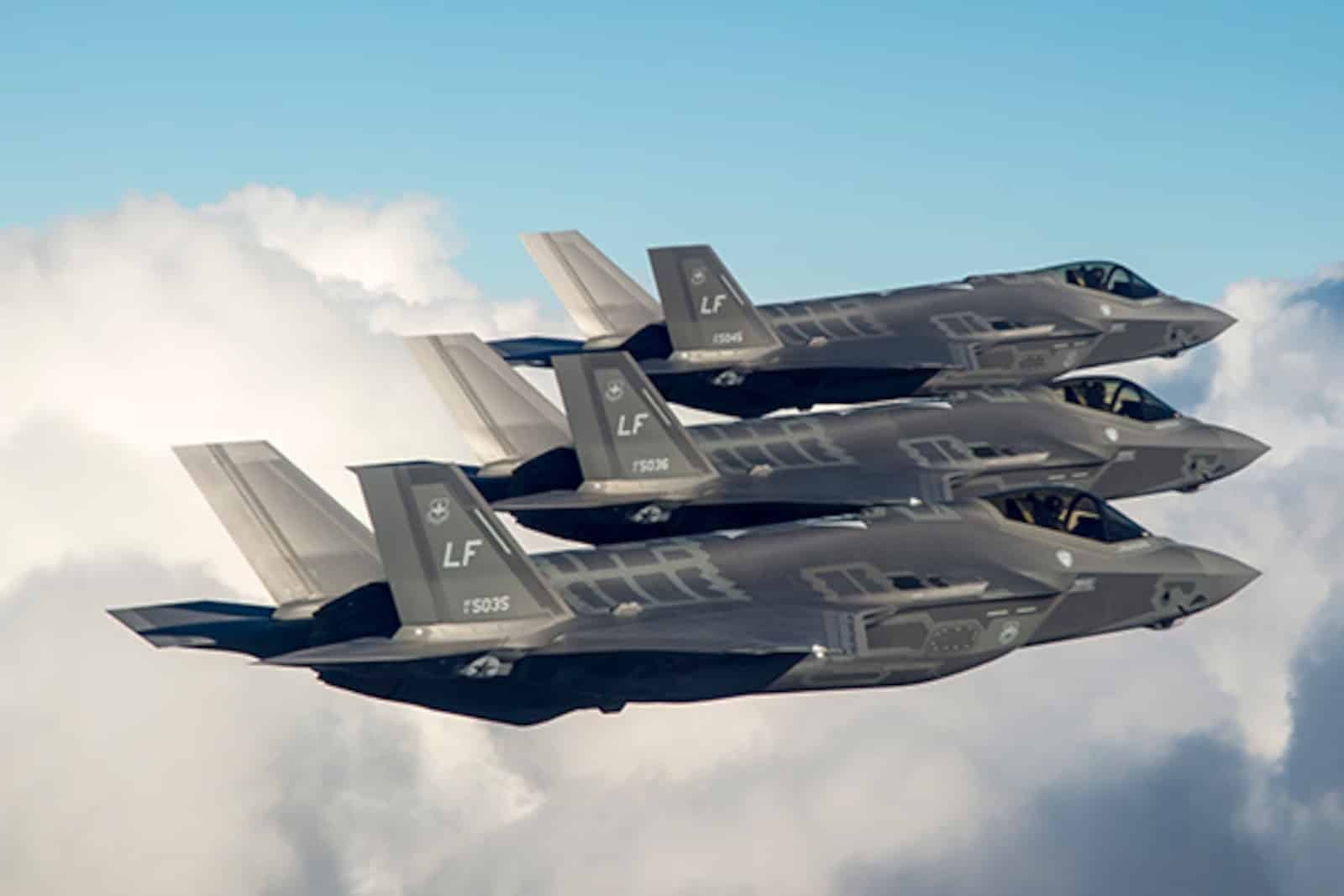
WASHINGTON: The United States has approved the potential sale of 48 F-35 Lightning II fighter jets to Saudi Arabia in a deal estimated at $24.3 billion, opening the way for one of the biggest expansions of Washington’s advanced weapons cooperation with Riyadh.
The State Department notified Congress of the proposed Foreign Military Sale on Thursday. However, the deal is not final and remains subject to congressional review.
The package includes 48 F-35A aircraft and 49 Pratt & Whitney F135-PW-100 engines, including 48 installed engines and one spare. It also covers communications and navigation systems, cryptographic equipment, electronic-warfare support, spare parts, training systems, flight simulators, software, technical documentation and logistics services.
Lockheed Martin Aeronautics and Pratt & Whitney Military Engines would serve as the principal contractors.
The State Department said the sale would strengthen Saudi Arabia’s ability to deter threats, defend its territory and operate more closely with US, regional and NATO forces. Washington also said the transfer would not undermine US defence readiness or alter the military balance in the Middle East.
F-35 deal carries strategic significance
The proposed sale would give Saudi Arabia access to the F-35A, a fifth-generation stealth fighter equipped with advanced sensors, electronic-warfare systems and secure communications.
Riyadh has sought the aircraft for years as it modernises its air force and responds to regional security threats, particularly from Iran. Saudi Arabia currently operates US-made F-15s alongside European Tornado and Eurofighter Typhoon fighters.
If completed, Saudi Arabia would become the second Middle Eastern operator of the F-35 after Israel and the first Arab country to acquire the aircraft.
The proposed fleet of 48 jets would represent two squadrons. Israel currently operates about 50 F-35s and has plans to expand its fleet to 100 aircraft.
That creates a sensitive issue for Washington because US policy requires it to preserve Israel’s qualitative military edge over other regional powers. The proposed Saudi acquisition is therefore likely to renew debate over how Washington balances its strategic partnership with Riyadh with its security commitments to Israel.
Regional tensions add urgency
The deal comes amid heightened tensions involving Saudi Arabia, Iran and Iran-aligned Houthi forces in Yemen.
The Houthis claimed on Wednesday that they had shot down a Saudi F-15 over Marib using what they described as a locally made surface-to-air missile. The group released footage purporting to show the wreckage of a Saudi aircraft, but the claim has not been independently established.
Saudi Arabia has long relied on air power in its confrontation with the Houthis. The proposed F-35 acquisition would add stealth and advanced sensor capabilities to its existing fleet.
The wider regional security environment has also prompted Riyadh to strengthen and diversify its defence partnerships while maintaining its longstanding military relationship with Washington.
China concerns complicate sale
At the same time, the proposed transfer faces concerns in Washington over the security of sensitive F-35 technology.
US lawmakers and defence officials have previously raised questions about Saudi Arabia’s expanding ties with China. Some have warned that closer Saudi-Chinese security cooperation could create risks for protecting highly sensitive American military technology.
Democratic Representative Raja Krishnamoorthi, a member of the House Intelligence Committee, has opposed the proposed sale, arguing that it could expose sensitive US defence technology to Beijing.
Similar concerns previously contributed to the United Arab Emirates suspending a planned $23 billion F-35 purchase in 2021 amid disputes over Abu Dhabi’s relationship with China and its use of Huawei technology.
Turkey, meanwhile, was removed from the F-35 programme after purchasing Russia’s S-400 air-defence system, reflecting Washington’s concerns over the protection of the fighter’s sensitive technology.
Deal linked to broader US-Saudi ties
The F-35 proposal also fits into President Donald Trump’s broader effort to deepen defence and economic ties with Saudi Arabia.
In 2025, Washington agreed to an arms package worth nearly $142 billion for Riyadh, which the White House described as the largest defence cooperation agreement in US history.
Saudi Arabia has also pursued the F-35 as part of Crown Prince Mohammed bin Salman’s Vision 2030 modernisation programme. Riyadh is seeking to expand its military capabilities while diversifying its international defence relationships.
The Biden administration had previously explored a possible F-35 transfer as part of a broader agreement that could have included Saudi-Israeli normalisation. Those efforts stalled.
Congress must review proposal
Despite the State Department’s approval, the proposed sale remains subject to congressional review.
Lawmakers have previously scrutinised major arms agreements with Saudi Arabia, particularly following the 2018 killing of Saudi journalist Jamal Khashoggi. Some members of Congress continue to question deeper military cooperation with Riyadh.
The State Department’s approval does not mean the aircraft have been delivered or that a final purchase contract has been signed. If Congress allows the proposal to proceed, negotiations, production and delivery would take several years.
Saudi Arabia’s embassy in Washington welcomed the proposal, calling it another step in the longstanding strategic partnership between the two countries.
The potential acquisition would therefore mark more than a major upgrade to Saudi Arabia’s air force. It would also deepen the US-Saudi security relationship while testing Washington’s longstanding commitments on Israel’s military edge and the protection of advanced American defence technology.