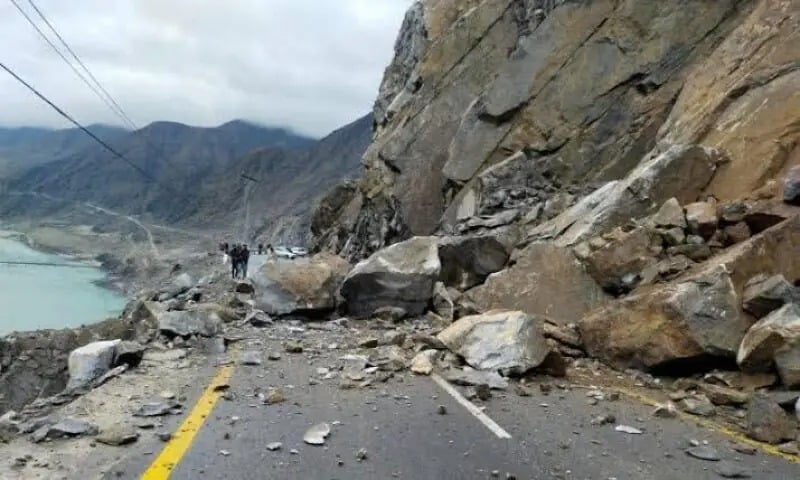
NAGAR: A landslide at a construction site in the Budalas area of Nagar, Gilgit-Baltistan, has resulted in the deaths of three workers and left several others injured.
Reports indicate that multiple laborers are missing, prompting an ongoing search and rescue operation.
The deceased and injured have been transported to the DHQ Hospital.
Landslide incidents are a recurring and devastating natural hazard in Pakistan, particularly impacting the northern mountainous regions, including Gilgit-Baltistan, Khyber Pakhtunkhwa, and Azad Jammu and Kashmir.
These events are primarily triggered by a combination of intense monsoon rainfall, rapid glacial melting, seismic activity, and, increasingly, unplanned infrastructure development and deforestation.
In mountainous areas like the Nagar district in Gilgit-Baltistan, landslides often occur at construction sites where heavy machinery and excavation destabilize already fragile slopes.
A tragic example of this was a landslide at a construction site in the Budalas area, which resulted in the deaths of three workers and left several others injured, while search efforts continued for missing laborers.
The impact of these disasters is multifaceted. Beyond the immediate loss of life and injuries, landslides frequently cause severe damage to critical infrastructure, including the Karakoram Highway, which serves as a vital economic lifeline.
The destruction of roads, bridges, and housing leaves communities isolated, hindering emergency response and rescue operations.
Furthermore, the loss of livelihoods, particularly in agricultural and construction sectors, deepens the socio-economic vulnerability of the affected regions.
Effective mitigation remains a significant challenge. While disaster management authorities continue to monitor high-risk zones, the combination of unpredictable climate patterns and human-induced environmental pressure exacerbates the frequency and severity of these incidents.
Strengthening early warning systems, implementing strict building codes in mountainous zones, and promoting sustainable land management are essential steps toward reducing the toll of these natural disasters.
As Pakistan faces the dual threat of climate change and geographical instability, proactive disaster risk reduction is increasingly vital to protecting the lives and economic stability of the northern communities.