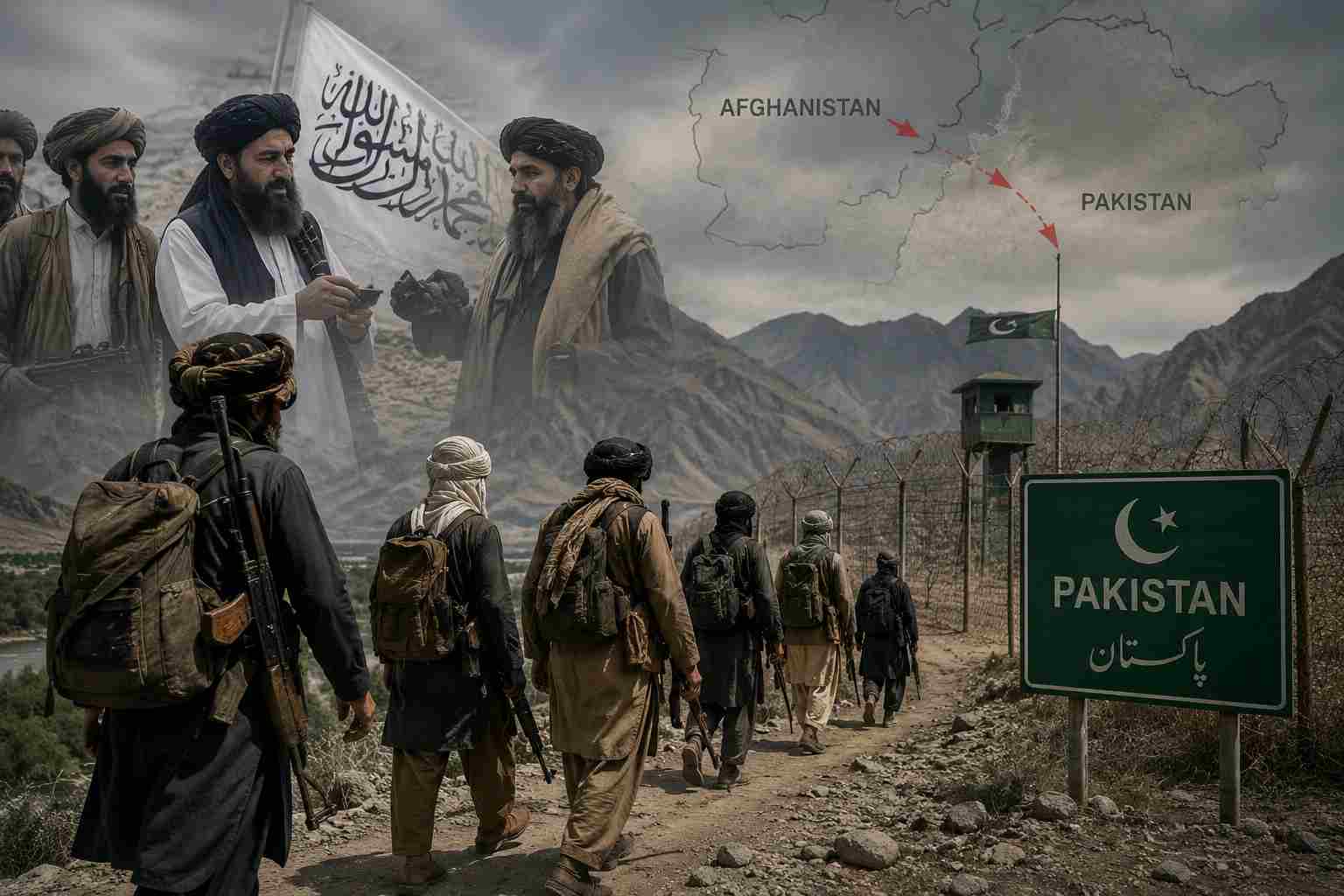
UNITED NATIONS: Pakistan’s Permanent Representative to the United Nations, Asim Iftikhar Ahmad, has said that the Taliban government is providing support for the Tehreek-e-Taliban Pakistan (TTP) and allowing the group to operate from Afghan territory, saying its actions are contributing to regional instability.
He also said militant attacks in Pakistan had increased sharply since the Taliban returned to power.
In an interview with Arab News, Ahmad said UN sanctions-monitoring teams and reports by the secretary-general had raised concerns over Afghanistan providing safe haven to several militant groups.
He said Pakistan recorded more than 5,200 terrorism-related incidents in 2025, in which more than 1,300 people were killed. He added that more than 3,000 attacks were recorded during the first six months of 2026, killing more than 830 people.
Ahmad clarified that these figures cover a broader range of terrorism-related incidents in Pakistan. The Global Terrorism Index, meanwhile, recorded 1,045 terrorist attacks and 1,139 terrorism-related deaths in Pakistan in 2025.
He identified the Tehreek-e-Taliban Pakistan (TTP), Balochistan Liberation Army (BLA), Majeed Brigade and the regional Islamic State group as major security threats to Pakistan.
Ahmad also alleged that some of these groups operate as proxies for elements hostile to Pakistan.
Asked whether the Taliban had failed to stop the TTP or were deliberately cooperating with the group, Ahmad said the issue went beyond a lack of capacity or political will.
Taliban Support for TTP Behind Attacks in Pakistan
He said that the Taliban government was providing the TTP safe havens in Afghanistan, with weapons, ammunition and financial support. He also accused it of facilitating militant planning and cross-border infiltration into Pakistan.
Ahmad said militants were also using advanced weapons left behind after international forces withdrew from Afghanistan.
He said the international community had three main expectations from the Taliban after they seized power in 2021.
These included forming an inclusive government, respecting human rights, particularly the rights of women and girls, and preventing Afghan territory from being used for terrorism against other countries.
“Five years on, there has been no progress in these three areas. Instead, the situation has deteriorated,” Ahmad said.
Also Read: UN Report Validates Pakistan’s Claims on Afghan-Based Militant Threat
He cited restrictions on women’s education and employment, as well as the Taliban’s limited model of governance, as examples.
Ahmad stressed that Pakistan’s dispute was not with the Afghan people. He said Islamabad objected to policies that had directly affected Pakistan’s security.