JAKARTA: The death toll from the powerful Indonesia earthquake in eastern region has risen to 54, while 135 people were injured, according to the latest reports.
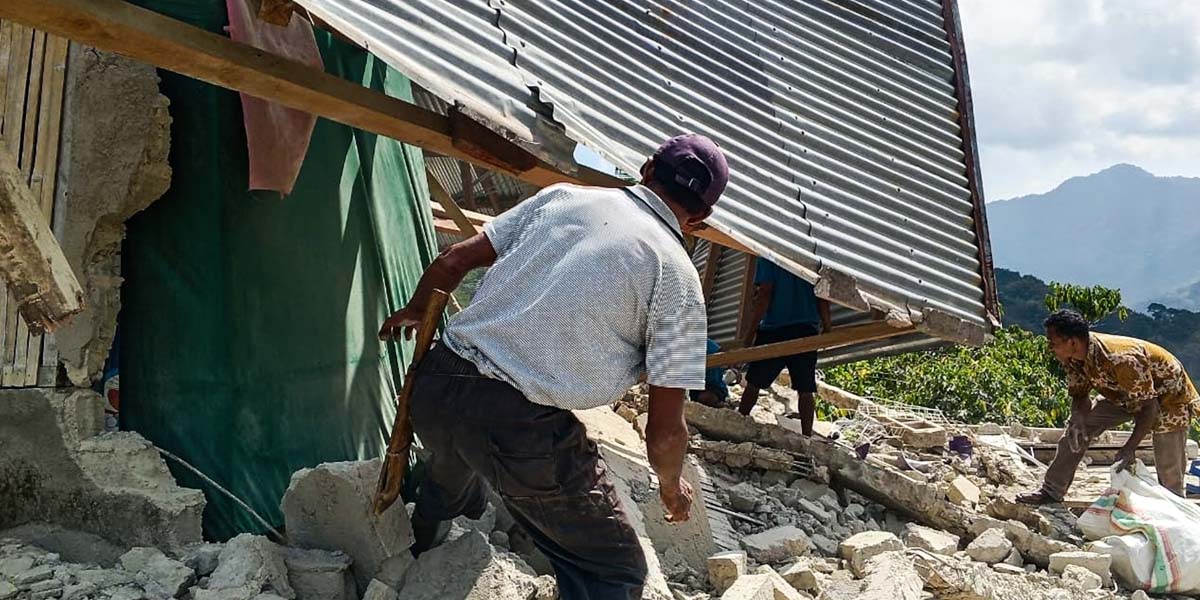
The earthquake struck early Saturday near Flores Island in East Nusa Tenggara province. It caused widespread destruction, collapsed homes and triggered landslides that blocked roads and cut off several communities.
More than 1,300 homes have been affected, including about 250 that were completely destroyed. Around 5,000 people have been forced to leave their homes and move to temporary shelters.
Rescue teams are continuing to search damaged buildings and areas affected by landslides. However, blocked roads, damaged infrastructure and disruptions to communications have made it difficult for emergency workers to reach some of the worst-hit areas.
The earthquake also triggered a tsunami warning, which was later lifted. Small tsunami waves were recorded along parts of the coast, with the highest reported wave reaching about 1.6 metres.
Authorities have recorded hundreds of aftershocks since the main earthquake. Reuters reported that nearly 1,600 aftershocks had been recorded by Monday, adding to fears among residents who have been reluctant to return to damaged homes.
The authorities have declared a 14-day state of emergency in East Nusa Tenggara to facilitate rescue and relief operations.
Thousands of survivors are in urgent need of food, clean water, medicine and other essential supplies. The Indonesian government has deployed thousands of military and police personnel and sent emergency aid to affected areas.
Recent Major Earthquakes in Indonesia
Indonesia is one of the world’s most earthquake-prone countries. It lies along the Pacific “Ring of Fire”, where several tectonic plates meet, creating frequent seismic and volcanic activity.
The latest disaster is among the country’s deadliest earthquakes in recent years. Here is a timeline of some of Indonesia’s major recent earthquakes:
August 15, 2026 — Flores, East Nusa Tenggara
A magnitude 7.7 earthquake struck off the coast of Flores. It killed at least 54 people, injured 135 and damaged more than 1,300 homes. About 5,000 people were evacuated. The earthquake triggered landslides, a tsunami warning and a large aftershock sequence.
April 1, 2026 — North Maluku
A magnitude 7.4 earthquake struck North Maluku, highlighting the continued seismic activity across eastern Indonesia. The quake was among the strongest recorded in the country during 2026.
February 5, 2026 — East Java
A magnitude 5.8 earthquake struck off East Java. The tremor caused significant local damage and casualties, underscoring the risk posed even by earthquakes considerably weaker than the latest Flores quake.
Indonesia’s Long History of Deadly Earthquakes
Indonesia has repeatedly suffered devastating earthquakes and tsunamis because of its location along major tectonic boundaries.
November 21, 2022 — Cianjur, West Java
A magnitude 5.6 earthquake killed 602 people and injured more than 7,800. Despite its relatively moderate magnitude, the shallow quake caused severe destruction in densely populated areas.
September 28, 2018 — Palu and Sigi, Sulawesi
A magnitude 7.5 earthquake triggered a tsunami and widespread soil liquefaction. The disaster killed 4,141 people and left hundreds missing, making it Indonesia’s deadliest earthquake disaster of the past decade.
August 5, 2018 — Lombok
A magnitude 7.0 earthquake struck Lombok, killing 518 people.
January 15, 2021 — Mamuju and Majene
A magnitude 6.2 earthquake struck West Sulawesi, killing 107 people and causing widespread damage.
The latest Flores earthquake has again exposed Indonesia’s vulnerability to powerful seismic events. Rescue workers are racing against time to reach isolated communities while residents remain on alert for further aftershocks.