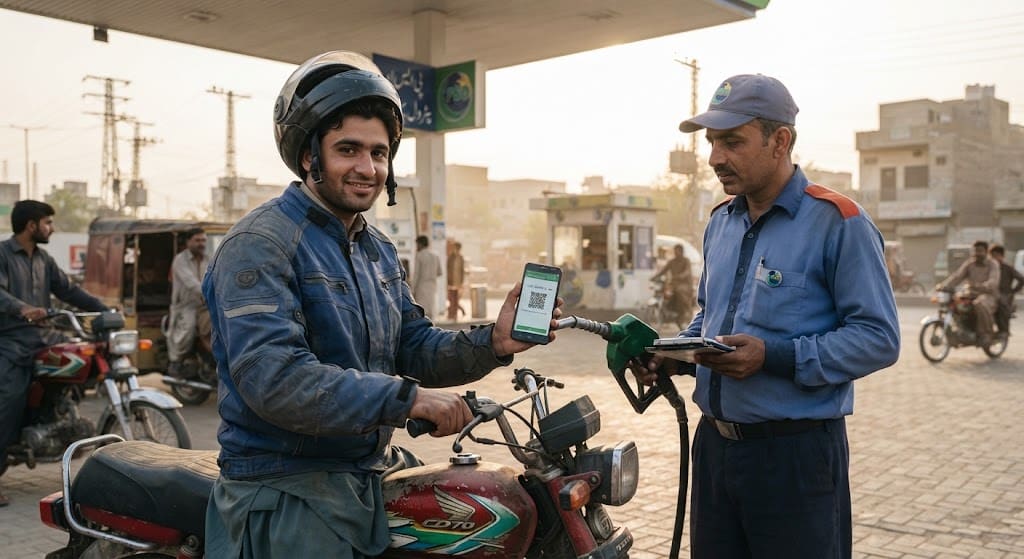
ISLAMABAD: Petrol Relief Scheme Registration Process and Guidelines Announced have been officially issued by the Ministry of IT, introducing a targeted subsidy that offers an impressive relief of Rs 100 per liter on petrol for deserving citizens.
To ensure a seamless rollout, an automated digital system has been developed with the collaborative assistance of NADRA, telecom operators, and various provincial departments, while vehicle verification will be handled directly through provincial transport and excise bodies.
To register, citizens are required to send an SMS from a SIM card registered in their own name to the designated short code, following a specific format that includes their CNIC number, vehicle registration number, provincial code, and registration date.
Upon successful registration, applicants will receive a confirmation message on their mobile phones. Before visiting any fuel station, citizens must send the keyword “TOK” to 9771 to generate a token, which can then be presented at pumps to avail the discounted rates under the Petrol Relief Scheme Registration Process and Guidelines Announced.
The relief targets owners of motorcycles, rickshaws, and vehicles up to 800cc, with a monthly quota of 20 liters for two-wheelers and rickshaws, and 30 liters for cars up to 800cc.
وزیراعظم خصوصی ریلیف سکیم
موٹرسائیکل، رکشہ اور چنگچی استعمال کرنے والوں کو ماہانہ 20 لیٹر تک پیٹرول پر 100 روپے فی لیٹر ریلیف
800cc تک گاڑیوں کے مالکان کو ماہانہ 30 لیٹر تک پیٹرول پر 100 روپے فی لیٹر ریلیفمزید معلومات https://t.co/CYPjBFExa1#عوام_کیلئے_ریلیف pic.twitter.com/HRXd94q4JK
— Barrister Danyal Chaudhry (@DanyalChaudhary) September 13, 2026
Distribution will commence in Islamabad on the intervening night of Monday and Tuesday, followed by a nationwide rollout starting between Wednesday and Thursday, as streamlined through the Petrol Relief Scheme Registration Process and Guidelines Announced.
Impact of Fuel Prices Hike for Low Incomes Across Pakistan:
The relentless escalation of petroleum prices over recent years has triggered a profound economic crisis for low-income households across Pakistan, severely eroding daily purchasing power.
For millions of daily wage earners, rickshaw drivers, delivery workers, and grassroots laborers, soaring fuel costs act as a regressive tax, rippling across every facet of survival.
As transportation and logistics expenses surge, the prices of essential commodities, basic food items, and public transport fares skyrocket, placing basic sustenance out of reach for vulnerable segments.
Many low-income families are consequently forced to make painful sacrifices, cutting back on healthcare, children’s education, and nutritional intake to offset escalating travel and utility expenses.
Small-scale entrepreneurs and independent transport operators also face diminished profit margins, as high fuel overheads threaten their livelihoods and push marginal workers into deeper cycles of debt.
In this challenging macroeconomic environment, targeted interventions such as subsidized fuel quotas are crucial.
ALSO READ: PM Shehbaz Announces Fuel Relief Scheme for Bikes, Rickshaws and 800cc Vehicles
Ultimately, alleviating the acute financial burden on working-class communities requires sustained structural relief measures to cushion vulnerable populations from the harsh shocks of global energy inflation.