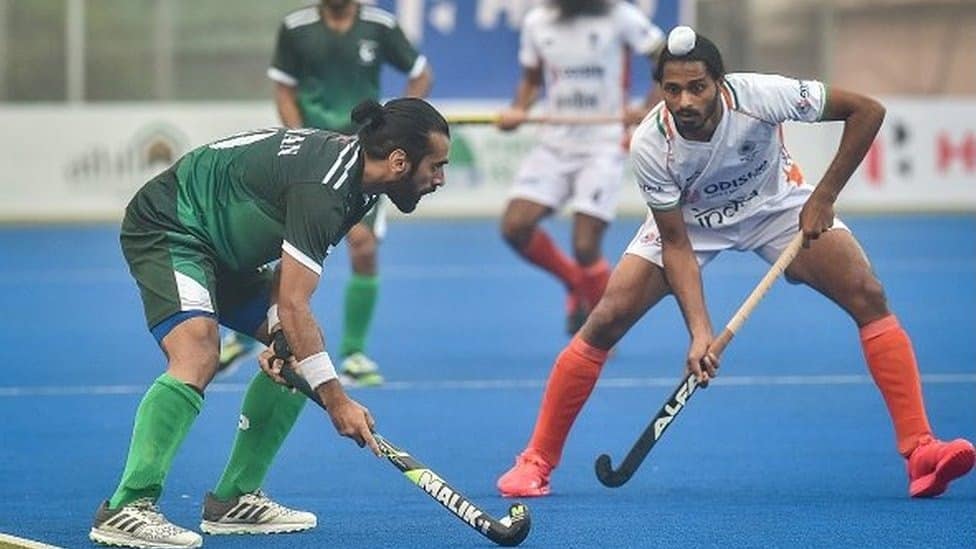
CHANDI GARH: Pakistan team’s participation in Asian Champions Trophy has been officially confirmed, with Punjab Chief Minister Bhagwant Mann stating that there is no issue regarding the national side traveling to India for the upcoming tournament.
Addressing the media, CM Bhagwant Mann announced that the prestigious continental championship will take place from October 27 to November 5 in Jalandhar and Mohali, featuring six top-tier nations including India, China, Japan, Malaysia, South Korea, and Pakistan.
Highlighting national guidelines, he clarified that while bilateral cricket and hockey series remain suspended, participating in multinational events aligns seamlessly with government sports policies.
Echoing these sentiments, Hockey India Secretary General Bhola Nath Singh emphasized the excellent mutual relations between the respective national hockey federations, noting that mutual respect persists regardless of on-field competition.
Meanwhile, Bangladesh and Oman have been designated as reserve replacements, ensuring uninterrupted tournament scheduling.
Note on India vs Pakistan Bilateral Sports Challenges in BJP’s Tenure:
Over the past decade under the Bharatiya Janata Party (BJP) administration, sporting exchanges between India and Pakistan have faced unprecedented hurdles, deeply intertwined with shifting geopolitical tensions and national security doctrines.
The central government’s official stance maintains a strict demarcation between bilateral and multilateral engagements.
While bilateral cricket tours, bilateral hockey series, and reciprocal bilateral fixtures have been completely frozen—primarily due to cross-border security incidents, terror attacks, and heightened diplomatic standoffs—the government has generally permitted Pakistani athletes to participate in multi-nation global or continental tournaments hosted on Indian soil, adhering strictly to international sports charters and Olympic guidelines.
However, even within multilateral frameworks, diplomatic friction frequently casts a long shadow over sporting ties.
Delegations often face severe bureaucratic hurdles, delayed visa clearances, and intense political scrutiny from hardline factions.
Periodic diplomatic crises have also driven sudden pullouts or compelled neutral-venue hosting arrangements for major tournaments.
For instance, high-profile security concerns and diplomatic standoffs have occasionally led to junior-level team withdrawals or intense public controversies surrounding cross-border travel.
Despite these structural impediments, sporting bodies like Hockey India frequently attempt to preserve channels of athletic engagement through continental championships, emphasizing that sports should ideally transcend political animosity.
Yet, the overarching reality during the BJP’s tenure remains that any form of athletic interaction is treated as an exception rather than the norm, heavily conditional upon rigorous security vetting and high-level political clearance.
ALSO READ: Former Pakistan Hockey Captain Dies
Ultimately, navigating the delicate balance between diplomatic nationalism and international sporting commitments underscores why securing clearance for the Pakistan team’s participation in Asian Champions Trophy remains a significant development for regional sports diplomacy.