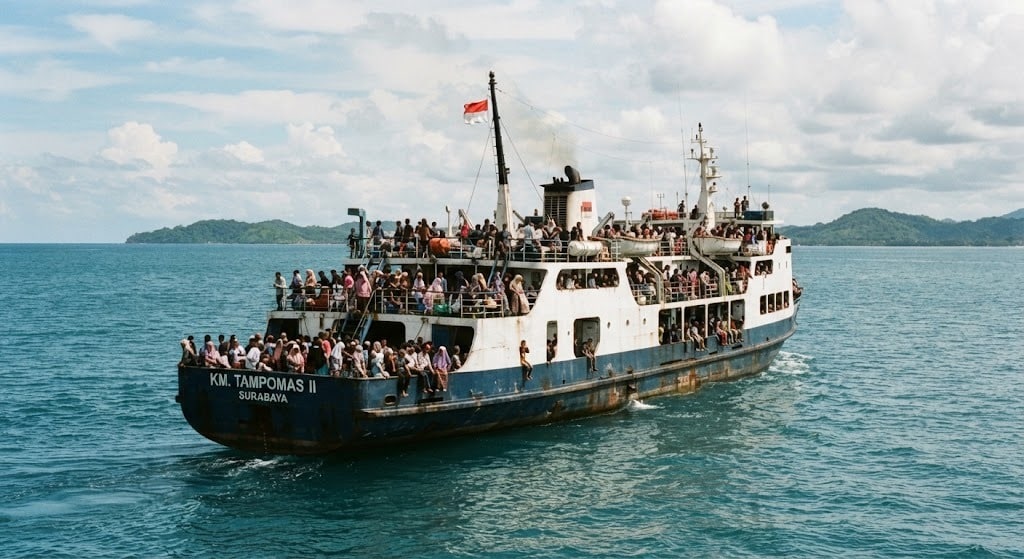
JAKARTA: A passenger vessel tragedy has unfolded after a passenger ship sank in Indonesia’s Java Sea, leaving rescue teams racing against time.
According to official reports, the maritime disaster resulted in 140 individuals going missing, prompting an intensive, large-scale search and rescue operation in the area.
A spokesperson for the rescue agency confirmed that 103 survivors and victims have been pulled from the water, though tragically, at least one person succumbed to the ordeal.
Multi-agency emergency teams continue scouring the area in the ongoing search for the missing passengers from the passenger ship tragedy.
Over the past decade, maritime transit across the vast Indonesian archipelago has witnessed several devastating ferry disasters, largely driven by volatile weather conditions, sudden tropical storms, and widespread compliance issues with vessel passenger manifests and safety regulations.
Because Indonesia relies heavily on inter-island ferry networks for affordable public transport, overcrowding and enforcement gaps have historically amplified the human cost of these calamities.
Notable incidents over the last ten years include major passenger ship sinkings in regional waters and severe fires aboard vessels traversing congested routes like the Java Sea and Bali straits.
While national search and rescue authorities (Basarnas) have increasingly deployed advanced asset tracking and coordinated naval responses, sudden high waves, swift ocean currents, and remote disaster zones continue to complicate emergency evacuations, leaving maritime safety a persistent national challenge following this latest passenger ship tragedy.
Major causes of deadly vessel drowning incidents typically stem from a combination of severe weather, operational failures, and regulatory non-compliance.
Sudden tropical storms, high waves, and swift ocean currents frequently overwhelm regional vessels, particularly in archipelagic waters.
Additionally, widespread issues with vessel overcrowding, exceeding passenger manifests, and inadequate safety equipment severely escalate casualty rates during maritime disasters.
ALSO READ: Strait of Hormuz Crisis Impacts 2,000 Vessels, 20,000 Seafarers: UN Agency
Enforcement gaps regarding safety standards and insufficient maintenance further compromise structural integrity, leaving ships vulnerable to capsizing or sinking when navigating congested commercial or inter-island transit routes.