LEEDS: Management is reportedly considering fielding Pakistan’s pace battery to operate for the opening Test match against England.
According to sources, Mohammad Ali, Mohammad Abbas, Aamer Jamal, and Khurram Shahzad are strong contenders to feature in the starting lineup.
The first Test between Pakistan and England begins tomorrow at Headingley, Leeds.
According to the Head Coach Sarfaraz Ahmed, Babar Azam will not be the part of the first match on account of his fnger inury and Salman Ali Agha will lead the Pakistan’s side.
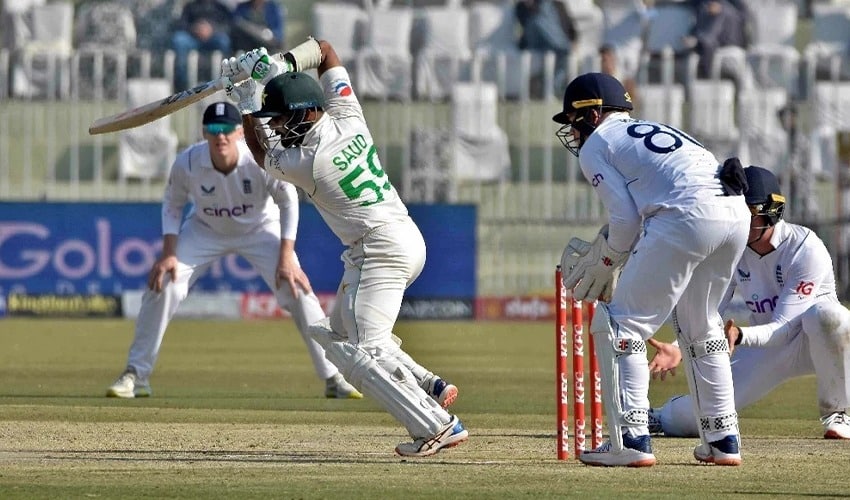
In addition, Shan Masood and Saud Shakeel have also recovered from their respective injuries, while opener Imam-ul-Haq is expected to secure a spot in the playing XI.
Pakistan vs. England Test Head-to-Head and Recent Form
The rivalry between Pakistan and England in Test cricket spans decades, featuring some of the format’s most historic encounters. Historically, the two sides have played numerous bilateral series.
England holds a favorable overall record in home conditions, leveraging swing-friendly pitches and seaming overheads, while Pakistan has historically relied on a mix of wrist-spin brilliance and sharp fast bowling spells to secure famous victories on English soil—such as memorable wins at Lord’s, Old Trafford, and Headingly.
Over the last three years, both teams have experienced distinct trajectories in red-ball cricket.
England revolutionized their approach under a high-scoring, aggressive tactical framework, achieving notable series wins and prioritizing an ultra-proactive style of play.
However, this aggressive template has occasionally led to volatile batting collapses.
Also Read : Babar Azam Injury Puts Leeds Test Against England in Doubt
Meanwhile, Pakistan’s Test cricket over the preceding three seasons has been characterized by a transitional phase, fluctuating home results, and efforts to establish consistency in their pace bowling and batting lineups.
With both teams featuring fresh and restructured squads for the current World Test Championship cycle, this series serves as a crucial test of adaptability against contrasting styles of play.