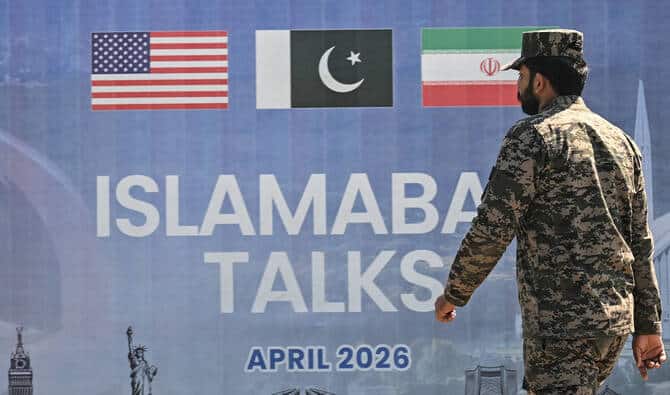
ISLAMABAD: Pakistan on Saturday reaffirmed its commitment to promoting diplomacy to achieve peace in the region, according to the Pakistani foreign office, with a deadlock persisting between the United States and Iran to end their war.
The conflict, launched in late February by the United States and Israel, has remained under a fragile ceasefire since early April.
Peace talks have so far failed to produce a breakthrough.
The crisis has disrupted global energy supplies through the Strait of Hormuz, a key route for oil and gas shipments, triggering volatility in global markets.
A telephone conversation was held between Pakistan Foreign Minister Ishaq Dar and Kuwaiti Foreign Minister Sheikh Jarrah Jaber Al-Ahmad Al-Sabah to discuss the evolving situation and its economic impact.
Pakistan’s efforts to promote dialogue and constructive engagement were highlighted, according to a statement issued by the foreign office.
These efforts were commended by the Kuwaiti side, which acknowledged Pakistan’s role in supporting regional peace and stability.
Tensions have remained high despite the ceasefire, with maritime restrictions and countermeasures continuing in the Gulf.
The Strait of Hormuz has remained partially disrupted, affecting a significant share of global energy flows.
Negotiations between Washington and Tehran have continued through indirect channels, including mediation efforts involving Pakistan.
A new proposal from Iran has been submitted through diplomatic channels, but concerns have been expressed by US President Donald Trump, who said he was not satisfied with the terms.
Further talks have remained uncertain, with the possibility of renewed escalation not ruled out.
Iran has also warned of a strong response if hostilities resume.
The situation has continued to impact regional stability, energy markets and global security calculations.