
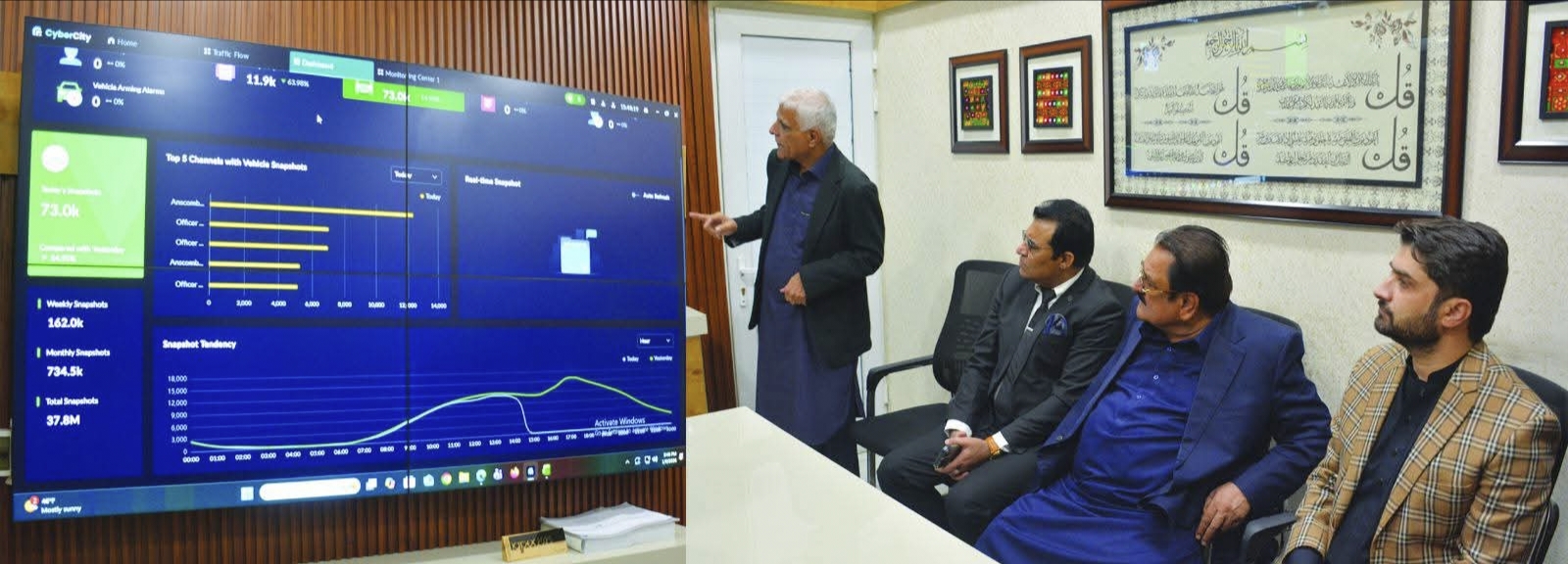
QUETTA: The Chief Justice of the Balochistan High Court, Mr. Justice Kamran Khan Mulakhel, conducted a detailed inspection of several ongoing development projects in the provincial capital on Tuesday, stressing the need to ensure smooth traffic flow and maximum citizen relief.
During his visit to projects under the Chief Minister’s Development Package, Justice Mulakhel was briefed by the Project Director on the significant progress made. Officials reported that the expansion of Inscombe Road has already yielded positive results, creating an effective traffic distribution system that has notably reduced congestion on Zarghun Road. According to the briefing, approximately 20,000 to 22,000 vehicles are now being diverted daily via Inscombe Road, which has also improved traffic conditions on the major MA Jinnah Road.
The Chief Justice was informed that several road expansion projects have entered their final stages. Construction work up to Science College Chowk has been completed, marking a key milestone in the urban infrastructure plan. In a move to enhance traffic management, the authorities have decided to install additional surveillance cameras throughout the city to monitor and regulate flow more efficiently.
During the inspection, Justice Mulakhel issued specific directives to accelerate drainage work at Imdad Chowk. He emphasized the urgency of completing this infrastructure, particularly to address water-related issues following rainfall, and instructed officials to expedite all ongoing works to minimize public inconvenience and ensure timely project completion.
Meanwhile Balochistan Chief Minister Mir Sarfaraz Bugti has stated that “baseless and misleading propaganda against the state” is a primary driver of chaos and violence, asserting that presenting factual narratives to the public, especially youth, is the critical remedy.
Presiding over a meeting of the Balochistan Center of Excellence on Counter Violent Extremism on Tuesday, CM Bugti emphasized the center’s role as a vital platform for research and awareness to combat extremist ideologies. He stressed that defeating extremism requires “institutional cooperation, integrated strategies and measures in line with modern requirements.”



