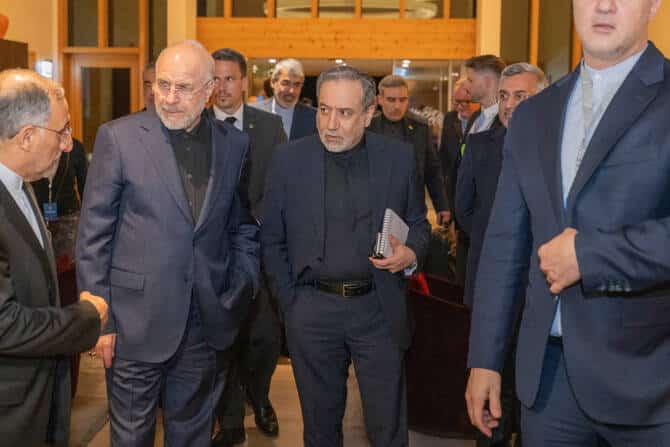
TEHRAN: Iranian Parliament Speaker Mohammad Baqer Qalibaf has confirmed that an agreement regarding the release of Iran’s $12 billion in frozen assets was finalized during recent Iran–United States negotiations held in Switzerland.
The necessary signatures have been completed, marking a significant development in ongoing diplomatic efforts between Tehran and Washington. The announcement comes amid continued negotiations aimed at addressing regional security concerns and economic issues.
Meanwhile, Iranian Parliament Speaker Mohammad Baqer Qalibaf and Foreign Minister Abbas Araghchi have arrived in Oman to participate in further discussions concerning the Strait of Hormuz, one of the world’s most strategically important maritime routes.
Qalibaf said that both sides agreed to establish a communication and coordination mechanism for maritime traffic in the Strait of Hormuz.
The measure is intended to prevent misunderstandings, reduce the risk of confrontation, and ensure the safe passage of commercial vessels through the waterway.
He further stated that discussions in Switzerland also resulted in an understanding related to safeguarding Lebanon’s territorial integrity and sovereignty.
The latest developments follow a decision by the United States Department of the Treasury to issue Iran a temporary 60-day general license allowing the production, transportation, and sale of Iranian oil.
The authorization provides limited relief for Iran’s energy sector and is viewed as a confidence-building measure within the broader diplomatic process.
However, the US officials emphasized that the exemption remains temporary and that future policy decisions will depend on Iran’s implementation of commitments and the overall progress of negotiations.
U.S. Treasury Secretary Scott Bessent stated that restrictions related to Iranian oil purchases by North Korea, Cuba, and Ukraine remain in place. He noted that existing sanctions frameworks concerning those countries have not been altered.