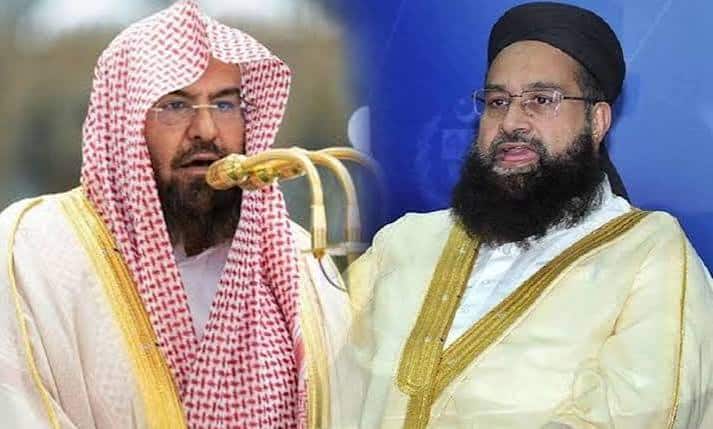
ISLAMABAD: Imam of the Two Holy Mosques Sheikh Abdul Rahman Al-Sudais has welcomed the trilateral defence agreement between Pakistan, Saudi Arabia and Türkiye, describing it as a positive development for the unity, security and stability of the Muslim world.
Sheikh Al-Sudais expressed these views during a telephone conversation with Pakistan Ulema Council Chairman Hafiz Muhammad Tahir Mahmood Ashrafi. The two discussed the prevailing situation in the Muslim world, the Makkah Joint Defence Agreement and other matters of mutual interest.
The Imam of the Two Holy Mosques said enhanced defence cooperation, mutual trust and coordinated security initiatives among Muslim countries could play an important role in promoting peace and stability in the region.
Hafiz Tahir Ashrafi described the Makkah defence agreement as a significant step towards strengthening unity and collective security in the Muslim world. He said Pakistan attaches great importance to its historic and brotherly relations with Saudi Arabia and Türkiye and would continue contributing to regional peace and stability.
Ashrafi also reaffirmed Pakistan’s commitment to the security and stability of the Holy Mosques, saying the Pakistani nation has deep bonds of love and devotion with Saudi Arabia and the Haramain Sharifain.
During the conversation, Sheikh Al-Sudais congratulated Ashrafi on his nomination for the Tamgha-i-Imtiaz and conveyed his best wishes. He also expressed good wishes for Pakistan’s prime minister, field marshal and the Pakistani people, praying for the country’s continued safety and prosperity.
The two leaders agreed that greater unity, mutual cooperation, enhanced defence capabilities and coordinated strategies among Muslim countries were essential to addressing emerging challenges and protecting the collective interests of the Muslim Ummah.
Pakistan, Saudi Arabia and Türkiye signed the Makkah Joint Defence Agreement in Makkah on August 7, 2026. Under its central principle, an armed attack against one member is to be considered an attack against all three, reinforcing their commitment to mutual defence and coordinated response.
Pakistani officials have maintained that the agreement is defensive in nature and is not directed against any particular country.
The agreement also provides for stronger political and military coordination and expanded cooperation in land, maritime and air defence, as well as emerging fields including cyber defence, unmanned systems, electronic warfare and artificial intelligence.
It further encourages joint development and production in the defence industry, technology transfers and enhanced defence capabilities. The framework has been presented as an additional mechanism for regional security and mutual defence cooperation rather than a replacement for existing defence alliances.