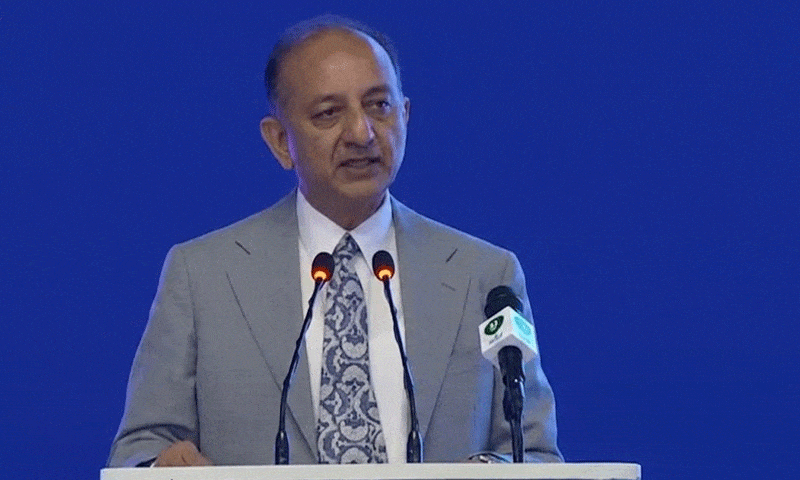
ISLAMABAD: Pakistan’s Climate Change Minister Musadik Malik on Tuesday warned that water scarcity was forcing farmers to abandon agriculture and said any weakening of the Indus Waters Treaty would have global consequences.
Speaking at an international seminar in Islamabad, Malik said water challenges faced by countries along the Nile, Euphrates and Indus rivers reflected a shared global problem rather than an issue confined to a single nation.
He said Pakistan had experienced irregular water flows at the Marala Headworks, with periods of unusually low releases followed by sudden surges. He argued that the issue was not climate change alone but control over river flows.
“Water should never be used as a weapon,” Malik said, warning that such actions threatened regional peace and stability.
He accused India of attempting to disrupt water flows allocated to Pakistan under the treaty. He also criticized India over environmental pollution, saying it ranked among the world’s major polluters.
Malik claimed that Indian actions had resulted in the deaths of about 6,000 people in Pakistan and injuries to thousands more. He did not provide evidence to support the claim.
The minister described the Indus Waters Treaty as one of the world’s strongest international agreements. He noted that it had survived three wars between Pakistan and India.
“If such a robust treaty can be undermined, then no international agreement will remain secure,” he said.
Malik said Pakistan had already approached international arbitration to protect its water rights. He said international legal forums had ruled that neither party could unilaterally suspend or terminate the treaty or divert rivers allocated under the agreement. He also accused India of disregarding those legal rulings.
He warned that the collapse of the treaty would affect not only Pakistan but also other countries that depend on shared river systems. He said the issue concerned global water security, international law and international peace.
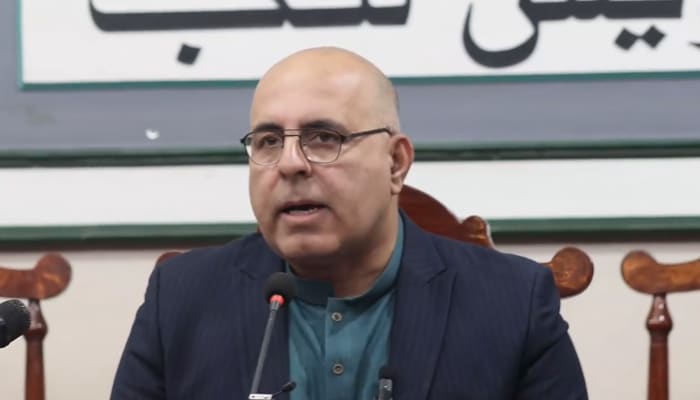
Also addressing the seminar, international law expert Ahmer Bilal Soofi said access to water, clean air and food had been recognized globally as basic human needs. He said violations of international water agreements were contrary to both international law and human rights principles.
Soofi said any attempt to render the Indus Waters Treaty ineffective or inoperative would be unlawful under international law.
He also accused India of linking the treaty to broader political disputes, arguing that international agreements could not be made conditional on unrelated bilateral issues.
Referring to the recent Pahalgam incident, Soofi said India should have pursued legal and diplomatic channels if it had concerns with Pakistan instead of escalating tensions.
He said Pakistan had raised India’s suspension of the treaty at the United Nations, arguing that the move violated both the treaty and the UN Charter.
Soofi called for disputes between Pakistan and India to be addressed through international law and diplomacy. He said dialogue between legal experts from both countries could help achieve lasting solutions.
He reaffirmed Pakistan’s commitment to honoring its international legal obligations while continuing to defend its national interests and water rights through legal means.