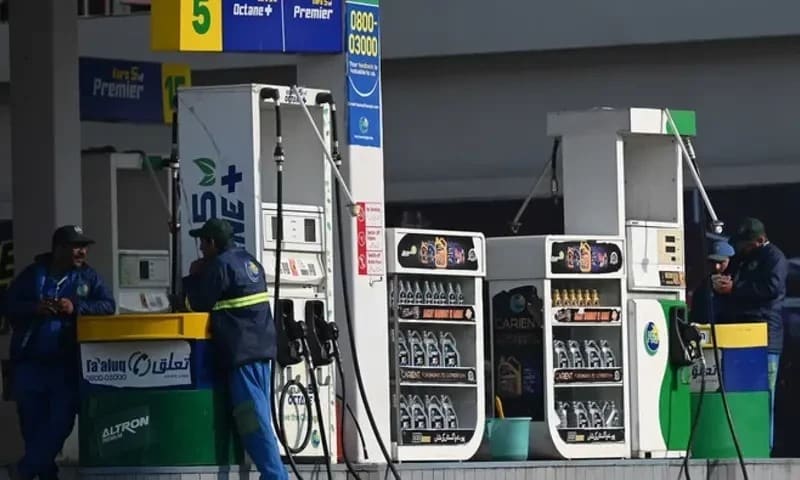
ISLAMABAD: Federal government increases petroleum product prices across Pakistan once again, placing an additional financial burden on citizens as new rates officially take effect.
According to sources, the federal government has raised the price of petrol by Rs 4.10 per liter, bringing the new rate to Rs 384.34 per liter.
Meanwhile, the price of high-speed diesel has seen an increase of Rs 6.41 per liter, pushing its new price to Rs 415.83 per liter.
An official notification regarding these upward revisions has been issued by the authorities, with the newly announced rates remaining applicable through September 16.
This continuous escalation in fuel costs has severely compounded difficulties for everyday consumers, triggering a cascading effect that drives up the prices of essential commodities, transport fares, and basic food items nationwide, confirming that the federal government increases petroleum product prices across Pakistan.
Dreadful Impact of Fuel Prices Hike:
The relentless upward spiral of petroleum prices has unleashed a devastating impact on the socioeconomic fabric of Pakistan, pushing millions of low- and middle-income households into severe financial distress.
As energy and fuel costs form the absolute bedrock of modern commerce, every incremental hike in diesel and petrol triggers an immediate, aggressive surge in the cost of public transportation, freight logistics, and agricultural supply chains.
Consequently, the prices of basic food commodities, electricity, utilities, and essential manufactured goods skyrocket, effectively neutralizing household purchasing power and widening the poverty gap.
For daily wage earners, salaried employees, and small-business operators, balancing monthly budgets has become an impossible challenge.
Many families are forced to make agonizing compromises, sacrificing critical expenditures on healthcare, nutrition, and children’s education simply to afford daily commuting and basic sustenance.
Furthermore, high fuel overheads strangle industrial productivity and agricultural output, inflating production costs, stunting economic growth, and discouraging small-scale enterprise expansion.
When transport operators pass on rising transit expenses to commuters, workers face diminished net earnings, deepening cycles of financial vulnerability.
Addressing this macroeconomic emergency requires comprehensive structural reforms, sustainable energy alternatives, and robust welfare buffers to protect vulnerable populations.
ALSO READ: Government Raises Fuel Prices Across Pakistan
Ultimately, mitigating the compounding hardships caused by these continuous fuel price hikes is essential for national economic stability, reinforcing the painful reality of how deeply every segment of society suffers when the federal government increases petroleum product prices across Pakistan.