
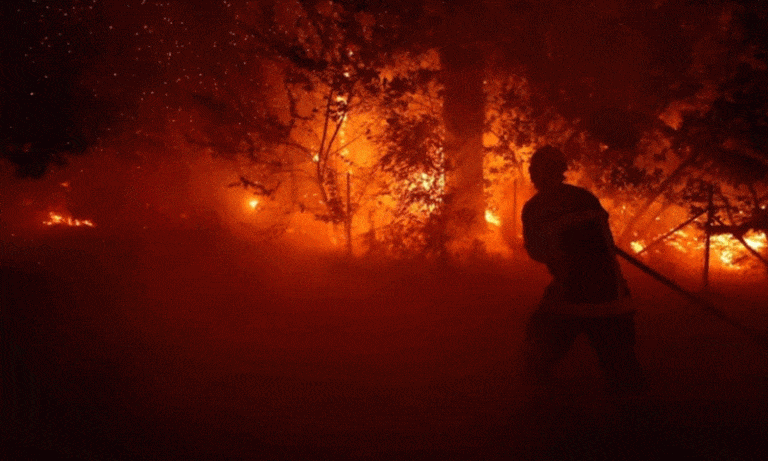
PARIS/MADRID: Massive wildfires driven by extreme heat, dry conditions, and strong winds have swept across France and Spain, forcing more than 220,000 people to evacuate and prompting emergency measures in both countries.
Authorities have declared emergencies in several regions and deployed the military alongside European Union emergency response teams to contain the fires and assist affected communities.
In southwestern France, nearly 200,000 residents evacuated from the Gironde and Landes regions. Authorities also ordered about 60,000 people near Bordeaux to leave their homes as a precaution.
The fires have burned more than 19,000 hectares of forest and destroyed at least 80 homes, officials said.
Emergency crews evacuated hundreds of people by boat from the popular tourist destination of Cap Ferret. Around 50 firefighters suffered injuries while battling the blazes.
French President Emmanuel Macron ordered the military to support firefighting and relief operations. He also requested assistance through the European Union Civil Protection Mechanism.
In neighboring Spain, multiple wildfires west of Madrid merged into a massive fire front, raising fears of further destruction.
Authorities evacuated at least 25,000 people and instructed another 40,000 residents to remain indoors because of the dangerous conditions.
Madrid regional President Isabel Díaz Ayuso described the disaster as the worst wildfire emergency in the region’s history. She said extreme heat, powerful winds, and multiple fire fronts had created a “perfect storm.”
The fires have already scorched about 15,000 hectares across Spain. Authorities have evacuated several towns as crews continue to battle the flames.
Spanish Prime Minister Pedro Sánchez announced plans to visit the affected areas and oversee relief operations.
Climate experts say increasingly frequent heatwaves, prolonged drought, and climate change are driving more intense and destructive wildfire seasons across Europe. They added that the area burned across the continent this year has already exceeded the average recorded over the past two decades.