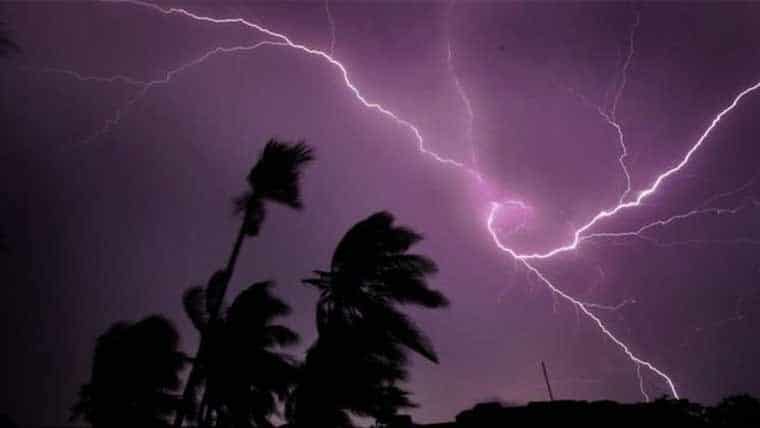
PESHAWAR: A tragic lightning strike in the Hangu district of Khyber Pakhtunkhwa has resulted in the deaths of three individuals and left four others injured.
The incident occurred in the Mirobak area, within the jurisdiction of the Kalaya police station, where a group of people gathered to dig a grave.
The lightning struck the site without warning, causing the immediate deaths of three men.
Four other individuals sustained injuries during the strike and were quickly transported to a local hospital, where they are currently receiving medical treatment.
The sudden and devastating nature of the incident has left the local community in a deep state of fear and panic.
Context: Weather-Related Fatalities in Pakistan
Pakistan has increasingly become one of the most vulnerable nations globally to extreme weather events, driven by climate change and shifting environmental patterns.
The country frequently experiences severe weather anomalies, including intense monsoon torrential rains, flash floods, destructive glacial lake outburst floods (GLOFs), severe heatwaves, and violent thunderstorms accompanied by fatal lightning strikes.
Over the past few years, these climate-induced disasters have taken a heavy toll on human life, livestock, and infrastructure across both rural and urban landscapes.
Mountainous and rural regions, particularly in Khyber Pakhtunkhwa, Balochistan, and remote areas of Sindh and Punjab, bear the brunt of these fatalities.
Thunderstorms and lightning strikes are exceptionally lethal in open rural terrains where field workers, farmers, and laborers lack immediate access to safe, sturdy shelter.
Similarly, during the annual monsoon season, intense downpours routinely lead to structural collapses of weak mud houses, drowning accidents, and widespread electrocutions from compromised urban power grids.
Compounding the crisis is the economic and infrastructural challenge of climate adaptation.
The lack of early warning systems for hyper-local events like lightning, combined with limited public awareness regarding safety protocols during severe storms, significantly inflates the casualty numbers.
As global temperatures continue to rise, the frequency and intensity of these unpredictable weather anomalies in Pakistan are projected to escalate.
This dangerous trend underscores the critical need for robust disaster management frameworks, climate-resilient infrastructure, and community-level safety education to protect vulnerable populations from nature’s increasingly volatile elements.