
QUETTA: Balochistan’s provincial budget for the upcoming fiscal year 2026-27, with a total outlay exceeding Rs 1,100 billion, will be presented in the Provincial Assembly today.
According to the Finance Department, Finance Minister Mir Shoaib Nosherwani is scheduled to present the budget on Wednesday afternoon at 4:00 PM, as final preparations reach completion.
Sources indicate that the upcoming fiscal plan is highly likely to be both surplus and tax-free.
Out of the total estimated outlay, the non-development expenditure is projected to be around Rs 800 billion, while the provincial Public Sector Development Programme (PSDP) size is expected to touch Rs 300 billion.
The budget allocations are anticipated to earmark Rs 170 billion for pensions and related expenses, Rs 150 billion for education, Rs 130 billion for law and order, and Rs 70 billion for the healthcare sector.
Furthermore, a proposal to increase the salaries of provincial government employees in line with the federal government’s policy is currently under consideration, alongside the expected announcement of 3,000 new job vacancies.
The Critical Need for Development, Jobs, and Businesses in Balochistan
Balochistan, Pakistan’s largest province by landmass, faces a critical and urgent need for structural development, youth employment, and robust business ecosystems.
Despite being exceptionally rich in natural resources and occupying a highly strategic geopolitical position, the province historically suffers from the highest poverty rate in the country, standing at nearly 47%.
This disparity stems largely from a vast, rugged geography and a scattered population, which severely limits access to basic civic amenities like healthcare, clean water, and education.
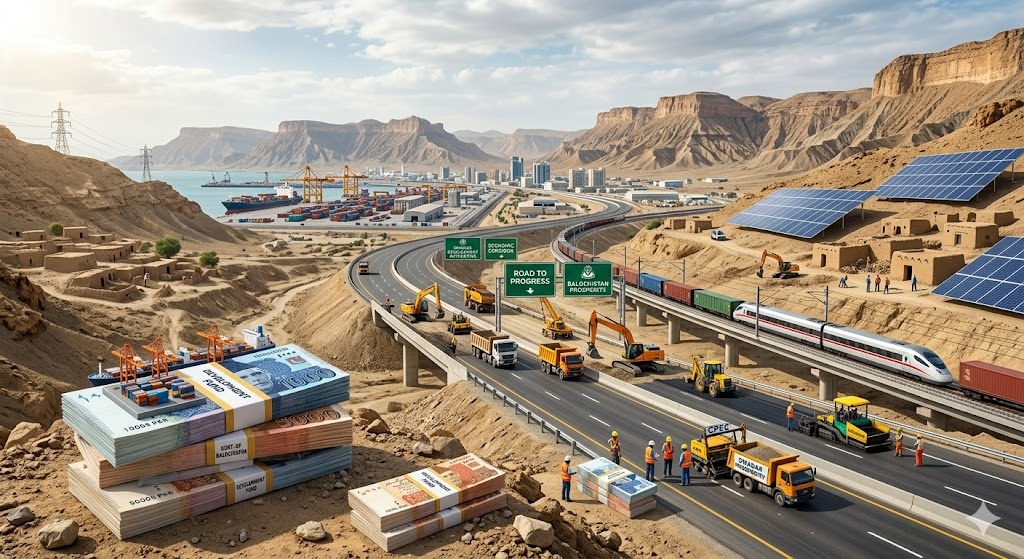
Modernizing infrastructure—specifically expanding inter-district road networks, improving border terminals, and establishing reliable energy systems like solar agriculture grids—is vital to connecting isolated communities with mainstream national markets.
Simultaneously, addressing the province’s high unemployment rate is paramount to ensuring socio-economic stability.
With a young and vibrant demographic looking for economic opportunities, creating sustainable jobs within the public sector and facilitating overseas employment are key steps toward alleviating widespread poverty.However, long-term economic resilience depends on transforming Balochistan from an aid-reliant territory into a business-friendly hub.
This transition requires empowering small-scale commerce, digitizing trade frameworks, and leveraging regional connectivity projects—such as the Gwadar Port development—to attract private investment.
By fostering localized industrial growth and supporting small-to-medium enterprises, Balochistan can successfully convert its immense potential into tangible prosperity for its people.



