WASHINGTON/RIO DE JANEIRO: A string of fatal aviation accidents has claimed eighteen lives in the Americas.
In the United States, a small aircraft crashed in the state of Missouri, killing all 12 individuals on board.
According to American media reports, initial investigations point toward a technical malfunction as the cause of the catastrophic failure.
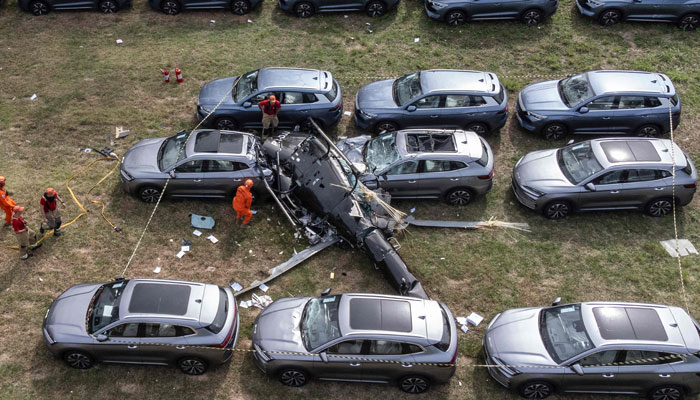
Meanwhile, a horrific mid-air collision in Brazil resulted in six fatalities. Brazilian media reports indicate that two helicopters collided in mid-air over the city of Rio de Janeiro.
Local authorities confirmed that following the impact, one of the helicopters crashed directly into an electric car parking lot.
The ensuing explosion and inferno completely incinerated 20 vehicles parked at the structure.
Officials verified that all six occupants across both helicopters perished in the accident, and a formal investigation has been launched to determine the exact cause of the collision.
Regional Trends in Aerial Accidents Across the Americas
Aviation safety across the Americas highlights a stark contrast between highly regulated commercial airspace and the more vulnerable sectors of general aviation and regional transport.
In the United States, commercial airline travel remains exceptionally safe due to stringent oversight by the Federal Aviation Administration (FAA) and the National Transportation Safety Board (NTSB).
However, small private aircraft and general aviation flights account for the vast majority of fatal accidents in the country, often triggered by mechanical failure, pilot disorientation, or sudden adverse weather conditions.
In neighboring Latin American nations, including Brazil, aviation challenges are compounded by varied regulatory enforcement, complex geographies, and dense urban layouts.
Brazil possesses one of the world’s largest private helicopter fleets, particularly concentrated in metropolitan hubs like São Paulo and Rio de Janeiro, where commuters use them to bypass gridlocked traffic.
This high density of low-altitude urban air traffic significantly elevates the risk of mid-air collisions.
Furthermore, across parts of South and Central America, infrastructure limitations at smaller regional airfields and aging fleets of private aircraft create persistent safety gaps.
These factors underscore a continuous regional need for modernized air traffic control systems, strict maintenance audits, and improved pilot training to mitigate fatal mishaps.