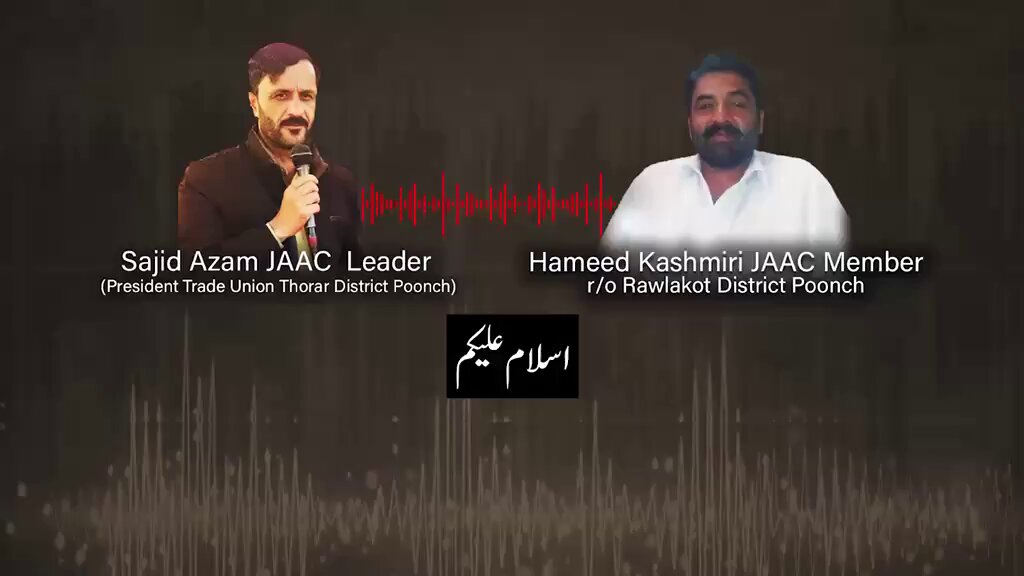
MUZZAFARABAD: The recently surfaced audio recording linked to members of a banned Joint Action Committee, has drawn attention after claims emerged that it contains discussions suggesting plans to disturb peace and public order in Azad Jammu and Kashmir.
The authenticity of the recording has not been independently verified by authorities so far.
In this regard, the individuals identified as Hamid Kashmiri and Sajad Azam are heard in the alleged audio discussing mobilization of supporters and coordination of movements toward specific areas.
One voice is claimed to assert that a large number of armed individuals are prepared for action, while also referring to advancing toward Rawalakot and securing the release of detained associates.
The audio further allegedly includes references to organizing groups at designated locations and making strategic entries into targeted areas.
However, there are certain statements attributed to the speakers have been widely shared on social media, prompting concern among observers and raising questions about the intentions behind such communications.
The banned Joint Action Committee has previously maintained that its activities are peaceful and aimed at advocacy within a political framework. The emergence of this alleged recording has led to renewed debate over those claims.
They note that claims of large-scale armed presence, as mentioned in the recording, appear exaggerated and should be treated with caution until independently confirmed.
At the same time, they caution against drawing conclusions solely based on unverified material, stressing the importance of a thorough investigation by relevant authorities to establish the facts.
So far, the security and policy observers have also mentioned the need for a measured and lawful response if any wrongdoing is proven.
They underline that maintaining stability in the region is essential, and any attempts to incite unrest could have broader implications for public order and regional narratives.