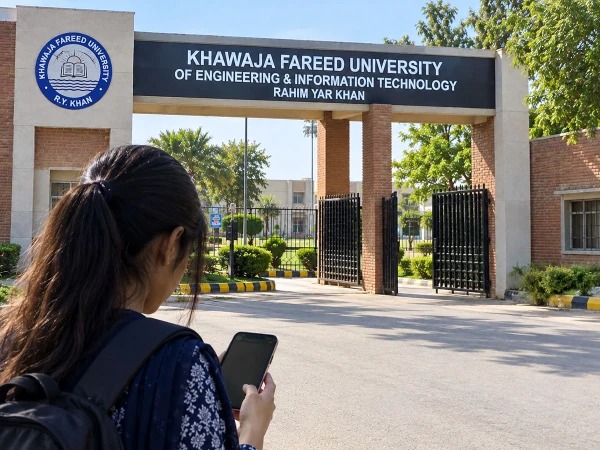
RAHIM YAR KHAN: Fresh concerns regarding campus safety and student welfare have emerged as harassment allegations against Khwaja Fareed University lecturer surface via WhatsApp screenshots on social media platforms.
The viral digital evidence highlights serious accusations leveled by a female student, who claimed that a faculty member subjected her to inappropriate messaging, constant pressure to meet, and direct threats of academic retaliation or grade manipulation upon refusal.
According to the student’s statements, the lecturer utilized text messaging, phone calls, and direct institutional contacts to pressure her, while allegedly dangling academic favors and grade improvements as incentives.
یہ سکرین شاٹس مبینہ طور پر ضلع رحیم یار خان خواجہ فریدؒ یونیورسٹی میں پڑھتی ایک طالبہ کی طرف سے سوشل میڈیا فیس بک کے ایک گروپ میں شئیر کئے گئے ہیں. جس نے شاید خوف کے مارے اپنی شناخت ظاہر نہیں کی. اس میں ایک استاد اس کو نمبرز/ گریڈز کا خوف لالچ دے کر جنسی تعلق چاہتا ہے. اس کی فی… pic.twitter.com/zHC0bBcBS4
— Ather Salem® (@AthSal01) September 22, 2026
The affected student stated that she has maintained a comprehensive record of the communications and formally notified the vice-chancellor via email.
In response to the public outcry, university administration announced the formation of a formal inquiry committee to investigate the matter, noting that standard disciplinary procedures will be initiated once a verified complaint is formally registered, bringing immediate national attention to the harassment allegations against Khwaja Fareed University lecturer surface via WhatsApp screenshots.
Systemic Challenges of Campus Harassment in Pakistani Higher Education Institutes
The alarming recurrence of misconduct in academic institutions underscores a pervasive crisis regarding student safety and institutional accountability across Pakistan.
Over recent years, multiple universities—ranging from regional campuses to premier national institutions—have faced severe backlash over faculty members abusing positions of authority.
These violations often manifest as coercion, psychological manipulation, and inappropriate digital communication, creating hostile learning environments for vulnerable students.
While many universities possess statutory anti-harassment committees under legal frameworks, bureaucratic delays, fear of social stigma, and institutional protectionism frequently deter victims from reporting misconduct.
Furthermore, the public exposure of cases like the harassment allegations against Khwaja Fareed University lecturer surface via WhatsApp screenshots highlights the critical failure of internal grievance mechanisms, forcing victims to rely on social media activism to secure administrative attention.
Effective institutional reform requires mandatory ethical training, strict enforcement of transparent reporting channels, and independent oversight bodies equipped to penalize perpetrators swiftly.
ALSO READ: Students Suspended for Harassing Female Lecturer
Without uncompromising accountability and robust protective protocols, trust in higher education institutions will continue to erode, leaving students exposed to systemic exploitation.